.
.
.
ARTE SIN TECHO :
www.artesintecho.org.ar
TOMÁS ABRAHAM :
http://www.tomasabraham.com.ar/
LA CAJA DIGITAL : EL PRUDENTE BERNI
http://www.tomasabraham.com.ar/cajadig/2009/caja_n19a4.html
Este trabajo se hizo a pedido de la dirección del Centro Cultural Recoleta con motivo de una próxima muestra de la obra de Antonio Berni. La carne es débil, por eso ante mucha insistencia y halago, acepté y remtí el escrito.
Fue rechazado de modo absoluto y descortés. Un éxito. El texto segrega su propio referente. Los personajes de los que habla Berni cuando describe el escenario de las artes plásticas argentinas pueden reciclarse. Basta evocarlos y resuscitan.
EL PRUDENTE BERNI (2002)
Berni ha encarado de modo preciso lo que significa ser un artista en la Argentina. Lo ha hecho sin pelos en la lengua. Con muchos menos pelos que los que aparecen en su pintura. El arte pictórico siempre es ornamental, pero la escritura, al menos en Berni, no quiere decir más que lo que dice.
No hace más que lo que aconseja: hablar de pintura de un modo simple.
Berni insiste en sus escritos que el hecho de ser pintor, o artista, en la Argentina, inclina casi por inercia a querer ser reconocido por los centros culturales del primer mundo. La felicidad del artista argentino no está colmada sin un aplauso extranjero, sin el brillo de la otra luz, la verdaderamente importante, la de las galerías de ultramar, la de los museos prestigiosos de Europa y EE.UU.
No se puede decir que Berni no haya conseguido algo de ese fulgor. Obtuvo el premio de grabado de la Bienal de Venecia. Desde entonces consiguió fama internacional. Pero esta excepción no hace más que confirmar la regla.
No fue fácil obtener tal distinción. Hacer lobby no es una tarea sólo vigente desde que se puso de moda la palabra, es una labor conocida hace tiempo. Tampoco fue una decisión sencilla ser enviado a Venecia junto a otros pintores más jóvenes para representar al arte argentino. Había que convencer a más de un funcionario y a más de un crítico de arte.
Pero ganó, y ahí vemos la foto de Antonio Berni de riguroso traje gris extendiendo su mano a otro señor trajeado que lo felicita y le sonríe. Es una ceremonia con un protocolo no muy diferente a una entrega de un diploma a un ingeniero en una escuela naval; de hecho entre el público sentado en un parque de la ciudad, vemos las gorras con viscera y escudo de representantes militares, y un rostro de una persona sentada en la primera fila que asoma justo en el hueco que dejan los dos brazos encontrados de Berni y el funcionario. Es un rostro conocido, si no es el auténtico al menos es idéntico al del señor Agnelli, el coloso de la Fiat.
Mientras se dan la mano, otro señor trajeado en un costado está por leer el nombre del galardonado con la próxima distinción. Cuántos trajes oscuros se usaban en aquella época! Cuántas corbatas al tono!
Alla XXXI esposizione biennale intertanzionale d´arte il premio del Ministero della Pubblica Istruzione riservato ad un incisore o disegnatore straniero è stato assegnato a ANTONIO BERNI.
Venecia, 16 de junio de 1962.
¿Qué hubiera pasado con Berni y su pintura si la rueda de la fortuna no lo hubiera condecorado en Venecia? Es una pregunta ociosa. Un filósofo romano seguramente se haría una fiesta especulativa con este tipo de interrogantes. " Hay destino, existe el azar, filosofemos", decía Séneca.
No sabemos qué hubiera pasado en la vida del pintor no sólo porque no somos sabios romanos sino porque ya pasó lo que tuvo que pasar: Berni es Berni. Y Berni fue premiado en el extranjero.
¿ Por qué nos dice entonces que los artistas nacionales siempre sueñan con viajar en majestuosas naves transatlánticas del arte y no son más que polizones circunstanciales?
Berni advierte e ironiza. Nos dice que es estúpido correr a presentarse y brindar con delgadas copas con galeristas de Nueva York de visita en nuestra ciudad. Los pintores creen que con palabras y almuerzos, amabilidades y afecto, podrán exhibir sus obras en la gran ciudad del norte. Berni sabe de negocios, e informa que el `business´ no está en promocionar lo nuestro sino en ubicar pintura mediocre que sobra en las galerías newyorkinas en el mercado local, snobismo mediante.
Las ideas de Berni son sugerentes en un medio como el nuestro en el que la cultura siempre tuvo que ver con damas de sociedad, financistas fruncidos y aristocratismos de vestidor. Es cierto que Berni arremete con más encono contra este tipo de liturgia altanera y lo hace menos respecto de protecciones y difusiones de capillas y sectas militantes. No es objetivo ni ecuánime, es político.
No sólo la rancia estirpe ha tenido sus circuitos paquetes bien custodiados, lo ha tenido también la izquierda cultural. Berni, claro está - es conocido el tema - fue afin a la ideología de esta última, pero ha sido también un librepensador, y, sobre todo, un libre pintor.
Berni decidió pintar en Argentina y pintar a la Argentina. Oscilaciones geográficas que tenía desde joven podían haberlo establecido en otras ciudades, principalmente París.
Pero volvió, y es esta una decisión que no está hecha para el aplauso. No es volver según Gardel. Ni tampoco un retorno meditado según un calendario patriótico. Volvió para pintar, porque su pintura necesitaba sustancia, y su íntimo sentir le exigió residir en la Argentina para que su pintura no fuera sólo decorativa.
Dijo que un pintor como él, formado en estas tierras, pierde si se instala en el extranjero. Será presa de lo que llama modernidad repetitiva de las ciudades del primer mundo.
Pero su viaje a los santuarios del arte no fueron vanos. Ir a París era un sueño mil y una vez soñado. Todo lo ansiado e imaginado desde la ciudad de Rosario, fue realidad en París. De ninguna manera Berni sintío desencanto alguno, decepción ninguna. París le confirmaba el atraso cultural que se vivía en la Argentina. Lo dice así: al llegar a París me di cuenta que estábamos atrasados cuarenta años respecto de lo que se hacía en arte en el mundo.
No hay progreso en la historia del arte, ya sabemos. Picasso no es mejor que Velazquez, pero, a pesar de esto, hay atraso. ¿En qué consiste? En copiar un prestigio ya caduco e ignorar uno nuevo que se está gestando.
Cuando Berni zarpa para Europa, en Argentina, nos dice, sólo podía hablarse de Quirós y de Fader. Es sorprendente que dos pintores, de manera especial Fader, que es un genio de la pintura argentina, que vivió aislado y con permanentes problemas de subsistencia, haya sido un mandarín cultural que cerraba el camino, o al menos el oído, de los que querían hablar de las nuevas generaciones de pintores.
Pero no olvidemos que en los años veinte, el impresionismo que en Europa era historia, en nuestro país podía ser a lo sumo una vanguardia recién comestible y de muy lenta digestión. Todavía se criticaba a Fader y se lo acusaba de ser un bocetista y de no terminar con prolijidad sus cuadros.
La marca y la forma de pintar de aquella época existe en Berni. Son bellas sus pinturas de los años veinte, El Galpón, Álamos, Paisaje de Córdoba, Puerto. Son una muestra de versatilidad y de su polimorfismo artístico.
Decíamos que Berni volvió a la Argentina después de conocer las mutaciones artísticas europeas. Y su retorno a la placidez de Rosario, a la vida chica, lo decidió a quedarse. Era un hombre de horizontes, lo señala en sus notas, usaba sus ojos para ver alejarse los barcos por el Paraná, y también para medir los imposibles cielos de la pampa.
Quería estar acá. Trabajó en un diario con Rodolfo Puiggrós. Se convierte en fotógrafo. Su misión era sacar fotos de prostitutas. Visita diferentes quilombos. Hay fotos maravillosas, especialmente de las que debían ser putas un poco más finas. Una mujer frente a un espejo con su rostro de perfil empolvándose la mejilla oculta y su espalda desnuda y dos nalgas divinas en el ojo de la cámara. Parece la foto de una princesa en su tocador real. A Berni, quizás como a todo pintor, le gustaba mirar. Buscaba con sus ojos las cosas y la gente como lo hace un cazador. Y como arma de caza, red de encierro, una sencilla cámara fotográfica. La usaba en los prostíbulos, la usó en los montes de Santiago del Estero.
Berni tenía un taller en París. Por las fotos, parece un reducto no muy grande y modesto en una calle marginal. Decir taller en París no significa necesariamente un lujo, significa galponcito. Ni significa bohemia. Menos en Berni, que era un hombre con pocos prejuicios y sí firmes prudencias. Le era ajeno el mundo excesivo de algunos artistas que frecuentaba en París estimulado por vino, morfina, cocaína. No lo necesitaba, pero lo acompañaba.
Decía conocer sus límites, es decir saber hasta donde podía, y lo que es más importante, aquello que quería. Quizás el único exceso que se permitió - llamarlo exceso es un equívoco demasiado largo de aclarar - es la pasión sexual. Le gustaban las hembras, además de las mujeres.
El mundo que gira alrededor del arte también fue materia de reflexión para Berni. Pero Berni no era un finoli. Empleo el anacronismo finoli para designar a quien desprecia a los marchands y al mundo del dinero porque considera que el arte es espíritu y el vil metal lo ensucia, lo hace plebeyo, prosaico y vulgar. Finoli es lo que Hannah Arendt llama filisteo, el hombre de espíritu cuya ambición es vivir de rentas o subsidios para mejor perorar en el Parnaso, habitat en el que sólo existe el trueque de bellezas.
Tampoco era un maldito, no quemaba sus pinturas para que el `mercado´ no le degradara el arte, ni se cortaba las orejas o se quedaba desmayado en vapores de ajenjo. Basta mirar sus fotografías para ver a un señor que puede ser empleado de un banco o agente de seguros. En sus fotos de joven vemos a un tímido hijo de inmigrantes italianos pidiendo permiso a su jefe para hacer un mandado. Berni parecía un hombre medio de clase media.
A pesar de este anonimato físico, tenía sus cosas singulares que decir respecto del complejo mundo del arte. Escuchemos sus palabras configuradas por su gran capacidad de síntesis: " Al igual que las grandes organizaciones financieras de circuito cerrado, el mercado del arte, en un alto nivel, se desenvuelve dentro de una red hermética de gente de fortuna, coleccionistas y traficantes de cuadros, comunicados entre ellos directa o indirectamente a través de grandes galerías internacionales".
Lo que le inspira este mundo no da lugar a equívocos, aunque reconoce que el galerista cumple una función intermediaria decisiva, además de una tarea importante en la promoción de una corriente estética o en la valoración de una personalidad.
Dicho esto, parecería que todo está bien, que hay cosas buenas y malas, pero hay que salir de este laberinto de matices. El ícono de la balanza nos hace pensar que hay galeristas buenos y malos, que no existen los santos remedios para las profesiones, ni siquiera para las artísticas. Pero de tanto comprender corremos el riesgo de transformarnos en uno de los monstruos que Berni fabricaba, el monstruo del `sí, pero…´ o el monstruo del `no es tan así´, nos convertimos en uno de los monstruos del pragmatismo y del realismo: el monstruo adversativo.
Berni es frontal. Cuando escribe sobre pintura tiene la sencillez del que sabe. Medita sobre el mundo con la resignación del rebelde. Admite la existencia del pesado muro de la opinión pública para que no se le caiga encima y lo deje sepultado, y solo. No quiere estar solo, desea mostrar su pintura, también que se la compren. Pero estas gratificaciones se pueden dar por añadidura, o no darse. Si se las busca se cae en el pozo, el pozo de la desafectación, el de la caída de la intensidad, el secado de la adrenalina.
Pintar lo que se quiere, lo que se ve, no lo que la gente aprecia; seguir al cliente o al crítico es perder la vista, los ojos Ya no ver es malo para un pintor.
Pero la gente existe, Berni dice que hay artistas incomprendidos, la gente no los entiende porque no sabe descifrar a quien le grita las verdades. Esto no es sólo culpa o incapacidad de la gente. El grito es inarticulado. Es, a lo sumo, una invitación al aquelarre. Un aullido es un clamor instintivo, ya sea de hambre, de furia o de orgasmo, pero no permite la reciprocidad. Y la entrega del arte necesita del prójimo, no como el pastor, para salvar el alma, sino para seguir pintando.
Por eso el artista debe articular su entrega, hacerla legible, figurable, comestible.
Berni evoca al pintor Greco, a quien describe como un arquetipo argentino de mentalidad ególatra, desbordante, fantasiosa, anárquica y dolorosa, que aún joven terminó en suicidio. Lo define como un caso de extrema vanguardia.
Qué raro e interesante es este concepto de Berni: extrema vanguardia! Uno de los rasgos de este extremismo es la desubicación del artista respecto de su dimensión local que lo lleva a utopías sacrificiales. El iluminado es poseído por la fe - la creencia - en el efecto purificador del holocausto de la obra creada.
El artista de extrema vanguardia crea un lenguaje radical que deshace todos los códigos existentes. La obra creada es única. Brilla sola. Y muere sola.
Parece que Berni no estudió semiótica, porque si lo hubiera hecho, si estuviera al tanto de la prédica de los suplementos culturales y de las revistas literarias, estaría enterado de que el lenguaje del arte se hace contra el sentido común, el lugar común, el lenguaje ordinario, contra las convenciones y los contratos idiomáticos, y que la incomprensión del público puede ser una muestra - según las teorías de la estética de la recepción - de que algo valioso se está gestando.
Y esta experiencia la vivió el mismo Berni aunque no haya estudiado semiótica, nos dice que supo en carne propia que las nuevas corrientes del arte una vez pasado un cuarto de hora van a dormir a la oscuridad fría de los depósitos, `como mis Monstruos´en el Di Tella´.
Pero Berni no es hombre que pueda sobrevivir en esquemas. La oscuridad no le parece un valor en sí, lo ve como síntoma que emerge de una mecánica psíquica de ambiciones esta vez sí, oscuras, surgidas de atávicas frustraciones inmigratorias.
Esta relación que establece Berni entre extrema vanguardia, inmigración y frustración, no es poca tela para meditar, quizás demasiada. Lo voy a resumir a mi modo, con el riesgo de traicionar el mensaje del maestro.
Se me ocurre, para dar un ejemplo aclaratorio de lo que dice Berni, que sí, es cierto, que, como se comenta, Buenos Aires es una ciudad en la que escriben cientos, hasta miles de poetas. Es permanente la admiración que produce la vocación poética no sólo en esta ciudad sino en el país entero. Cientos de revistas de poesía, poemas que descienden como la lluvia en Londres, obligan a preguntarse a qué se debe tamaña fertilidad. He llegado a una sola respuesta: la cantidad de poetas que existe en nuestro medio está en directa proporción a lo mal que se escribe en prosa.
Cuando la prosa es inabordable - género que de inmediato desnuda los defectos, y exige también de inmediato la pericia en las frases - entonces qué mejor que escribir poesía, ya que con la sola mención del género ya se está en un lugar. ¿Cuál? Precisamente, el de la poesía.
Es una salida típicamente argentina a una dolorosa dificultad, ya nos viene de Perón que le declaró la guerra a los alemanes depués de que éstos se rindieran; o de nuestros actuales gobernantes que decidieron no pagar la deuda externa una vez que no nos prestan más un cobre.
Es el coraje del pirata que abandona su nave para evitar el abordaje. Por eso hay tantos poetas, porque son extrema vanguardia, y lo son porque no saben escribir en frases continuas, de ahí que las parten y se elevan.
No sé si con estas cuestiones de piratas, Perón, deudas y poetas, despejo la maleza del problema de la relación entre la extrema vanguardia y los consumidores de cultura, espero que sí; al menos quisiera favorecer la comprensión de la posición de Berni que dice extrema vanguardia porque se refiere a un tipo de extremistas por convicción que están cargados de idealismo o de lo que llama `espontáneo heroísmo´. Este género de artistas está predispuesto a las teorizaciones potenciadas - que Berni sentencia como `sin fundamento ´ -, al izquierdismo infantilista, al revolucionarismo de capilla, la libre sexología, o la exploración de lo exótico por lo exótico.
En realidad lo que digo de la entidad llamada poeta no es muy diferente de aquello que dice Berni sobre los artistas modernos. Dice que en la actualidad cualquiera se improvisa pintor a condición de tener algo de temple y buenas amistades. Que en las grandes ciudades flota una población de hombres sin orientación ni destino paara quienes el pintar resulta una justificación fácil y provechosa de la vida.
Pero dejemos este tono de preceptor de liceo.
Decía que Berni es un ser prudente, un conservador en el sentido de que puede llegar a pensar que siempre hay algo bueno para conservar, que no hay que desmerecer la vida y las cosas por el simple ejercicio del desprecio. De todos modos eso tampoco lo conforma, él también es un innovador, pero no por eso deja de llevar su contabilidad. Me refiero a que sabe que ciertas palabras tienen su costo existencial, y que cualquier costo no tiene, a veces, sentido pagar. Berni no parece ser Fausto.
Nuevamente me veo obligado a evocar, o a suponer, que en el dominio del amor y el sexo, Berni sí estaba dispuesto a inversiones de alto riesgo, pero no tanto en otros terrenos.
Debe ser por estos frenos y estas riendas que nos dice que debe haber una necesaria relación, aunque sea mínima, entre el espíritu creador, la realidad social, y la vida cotidiana del ciudadano medio. ¿ Con qué fin? Para poder subsistir, agrega.
Hemos amarrado al menos una nave: sobrevivir, subsistir, vivir. Berni quiere vivir, no es una decisión natural. No creo estar diciendo una obviedad. Al menos no es un problema banal para filósofos. Camus comenzaba de este modo su filosofar. Siguiendo el clima de los rebeldes metafísicos - Kierkegaard, Dostoievsky, Nietzsche - Camus decía que vivir era una elección, al igual que el suicidio. No creía en la fuerza irrevocable del instinto de conservación. Romántico, estimaba que había un camino moral específicamente humano en cuestionar la fuerza del instinto de vida.
Berni sugiere - recordemos que hablamos de una labor para sobrevivir - que el creador debe calcular el peso mental de la mayoría silenciosa, con su sensibilidad masificada y su particular estilo de vida, cuyas bases ideológicas - completa - son sólidamente afirmadas por los medios masivos de comunicación.
Operar radicalmente y de frente contra el gusto y las costumbres de la mayoría o contra los que oficiosa u oficialmente los fomentan, es golpearse la cabeza contra un muro de cemento.
Berni dice que la cultura, al igual que la política, es el arte de lo posible, y que este posible no es el mismo en Nueva York, París y Buenos Aires.
Una tras otra, concluye, las obras vanguardistas mueren por asfixia povocada por el entorno o por un voluntario suicidio.
Por si alguien no entendió aún, por si hay alguien en la sala que es cabeza dura, Berni nos da una imagen clara y distinta de su pensamiento, tan clara como la que rodea a la yema del huevo.
Nos dice que en la Argentina nos encontramos en la etapa del huevo y no del pollo. Si del huevo queremos obtener un pollito, se le debe someter una cantidad de días al calor moderado de una incubadora o de una gallina clueca. Tratar de acelerar la gestación llevándolo a mayores temperaturas, producirá un huevo duro, y nada más.
Berni ha visto con ojos precisos cierto ambiente de nuestra colonia artística. Sus características sobresalen en un medio en el que los prestigios se combinan con el dinero como lo es el de la pintura. En la literatura los dineros están casi ausentes y la lucha por el prestigio se dirime en formas prácticamente puras. Las envidias revolotean desnudas.
Nos habla de un ambiente versallesco en el que se despliega la galantería de la tilingada oscura y el pituquismo intelectual de la calle Florida. Berni es ocurrente con sus imágenes literarias. Denuncia el espíritu mundano y pedante de la clase que compra cuadros y que alaba las filigranas decorativas de los mimados artistas bombones.
Estaba irritado por la moda que privilegiaba el arte abstracto, el tachismo, las propuestas cinemáticas, los happenings, y que despreciaba por candorosa y rústica la pintura realista. Hasta la nueva figuración le parecía a Berni un modo de conceder y maquillar, por lo tanto de debilitar, la fuerza de la presencia humana y de lo que la rodea.
Para Berni el cuerpo humano es lo que puede conmover al mundo. En esto el realismo le parecía irremplazable.
Tenía una actitud crítica frente a la teoría del diseño industrial y su práctica aplicada a los objetos de consumo masivo. Rechazaba la posición de los artistas que decían que se debe abandonar el mundo poblado de fantasmas de la imaginación para preocuparse por rodear al hombre de cosas reales.
Este llamado a lo concreto y lo útil de parte de las nuevas formas de un arte combinado con la industria, este llamado a mantener una relación directa con las cosas en lugar de una relación ficticia, disgusta a Berni no sólo porque se niega el valor mercantil de lo ofrecido en nombre de una nueva entidad estética llamada diseño, sino porque ve que es inevitable que se recree un nuevo campo de ficción, pero esta vez sin ideal.
Creo que vale la pena detenerse un momento en esta idea de una ficción con ideal y otra sin ideal. No porque en la frase que sigue surga un concepto definitivo o una nueva idea ampliatoria de Berni. La deja picando, como juguete de Diónisos.
¿Cuál puede ser un ideal de la ficción? Ninguno por supuesto, no se trata de Un Ideal, sino de la virtualidad, una zona de misterio, el punto imposible que se crea desde el momento en que el pintor se enfrenta a su tela y el escritor a su espacio vacío.
El arte nada tiene que ver con la religión pero sí con los aleteos de la divinidad. Una divinidad atea y huérfana como lo son las infinitas formas del animismo. El arte es una religión inútil, no es el opio del pueblo sino del artista y, a lo sumo, de su espectador.
La ficción con ideal remite a una inutilidad. La diferencia entre un puente hecho por un ingeniero y el que se propone un artista, reside en que en el último caso no es conveniente cruzarlo. Hay algo de locura en el arte, algo mal hecho, un malentendido, una tarea absurda.
Que un hombre dedique su vida a dibujar en medio de hombres que hacen cosas reales para necesidades reales, no sólo nos habla de la pureza espiritual y de la nutrición sublime del alma, sino de un gasto excesivo, un lujo existencial, una piel que muta, un sobrante, una fiesta, un derroche.
La necesidad de expresarse es un misterio. Los arcanos explicativos se enredan rápidamente. El deseo de un nuevo nacimiento, la creación de un cuerpo otro que haga circular nuestro nombre, siempre las palabras se detienen ante algo inefable. Pero la pulsión de inventar nos conecta con el mundo de un modo que nada tiene que ver con hacer cosas atractivas y armónicas para seducir al cliente.
La forma en el arte no es diseño, es un trabajo con la materia que interpela al prójimo. Sin esta interpelación del pintor, el escritor y el músico, a su receptor, sin esta provocación o desafío, nada distinguiría la labor artística de cualquier otra tarea instrumental o comunicativa.
Está de más decir, espero, que un objeto para uso doméstico, privado o público, que provoque al consumidor, que lo pierda en los gestos y lo inhabilite para una resolución rápida, tiene escasas posibilidades de aceptación.
Más cercanos al arte están los `gadgets ´, lo están por su inutilidad, pero no despegan de una obligada comicidad.
Hablar de arte es impúdico. La figura del artista da lugar a todo tipo de fatuidades. Berni es el primero en desconfiar de la capacidad de crear. La palabra creador es la que autoriza las obsenidades del corazón. La estética de opereta.
Berni dice que era más auténtico el artista que se creía un imitador de su modelo y no un creador que se coloca a sí mismo como la finalidad más importante de la obra.
Este exhibicionismo inventivo del artista está en consonancia con el lenguaje de la crítica. Berni habla de la frase literaria y de la filosofía verbalista aplicada a la pintura.
Le ha tocado al mismo Berni ser objeto del culturalismo de la crítica que no puede hablar de él sin emparentarlo con una familia que va de Botticelli a Arroyo, Redcalcati, Klasen, Koss, Foldes, Rancillac, Telemaque, Baj, Kudo, Nikos, Gerchman, Ferro, Klein, Tinguely, y de tanta otra gente que tampoco conozco ni conoceré a menos que me decida a ser un borracho perdido entre un vernissage y otro.
Se me ocurre que es en ese sendero que se dirige la meditación de Berni. Por eso su realismo, o su nuevo realismo como se dispuso a llamarlo, nada tiene que ver con misiones pedagógicas. Las pinturas testimoniales de Berni no se reducen a una preocupación social, no resultan de una decisión programática y racional.
Berni quiere un arte sustancial, se siente incómodo en el lugar del artista. Lugar de prestigio y autoridad en un mundo de espectros y danzas patéticas. En un país como el nuestro en los que las formas del sufrimiento humano, las de la pobreza, la miseria, el dolor del hambre, en el que las formas más crueles de la desprotección se meten en la privacidad de los protegidos, la belleza está cuestionada.
No duerme tranquila gracias a la distancia y al espacio libre que necesita para ser contemplada. No puede instalarse en una zona sacra como en los países que desplazaron su violencia, racismo y sadismo a otros continentes. Berni inventa a Juanito Laguna en sus paseos en la ciudad. Hoy en día ya ni necesitaría pasear. Junto a Juanito descubre el mundo del deshecho útil. La importancia en nuestras sociedades de la basura. La mete en los cuadros.
Descubre la melancolía del kitsch, el adorno cache, los sustitutos de lo imposible de poseer. Mundo de la parodia, de la doble parodia. La primera es la de quien se hace pasar por lo que nunca será. La siguiente es la de quien se apropia de lo vulgar como signo de distinción.
Lo kitch es expresión de una aristocracia. Una relectura culta. Una risa desde lo alto.
Berni inventa a Ramona Montiel y dice que se inspira en cierto tipo de prostituta. Más bien parece inspirarse en en vasto muestrario de encajes, puntillas, gasas, bordados, servicios de mantelería, cortinados, breteles, fajas, ligas, corpiños, peinetas, que cubren un rostro mal afeitado de mujer.
Juanito Laguna y Ramona Montiel le han hecho un gran favor a Berni. Le han facilitado una identidad. Y le han hecho una linda trampa. La que obliga a destrabar el cepo para mostrar que Berni también viaja por otras imágenes, quizás más bellas, sensuales, emotivas.
Nos preguntábamos al comienzo qué hubiera pasado con Berni sin el premio de Venecia. Agreguemos otro interrogante ficción: ¿ qué sería de Berni sin Juanito ni Ramona?
En los cabos extremos que podemos recoger de la madeja de su obra y que rodean a los dos personajes están las figuras de los pobres de la Argentina, desde los desocupados, los peones, los hacheros, las familias santiagueñas; hasta las tristes figuras de la pequeña clase media bordando, aprendiendo danza, mirando con ojos tristes por encima de un pullover de lana gruesa. En el otro extremo la belleza fatal de la mujer deseable. La que está sentada en el `Chelsea Hotel´, las imponentes tetas erguidas de rubias semidesnudas, las mujeres jóvenes. A medida que Berni envejece, la mujer jóven se le mete en la pintura, y, quizás en la vida.
No puedo hablar de erotismo en sus cuadros del setenta, es un porno tácito. Sus mujeres están para ser…amadas, y comidas. Es una invitación de lupanar. No se trata de prostitutas, sino de las formas más incontrolables del deseo. Berni está literalmente caliente. O caliente por no despertar más calentura, como le pasa en la vida a todo hombre en su ocaso.
Su probablemente último cuadro, de 1981, que no tiene título, es el de una enigmática mujer desnuda acostada en la arena de una playa iluminada por la luna llena, a orillas de un mar verde mientras un avión pasa sobre las aguas indiferente a este cuerpo macilento. Debería tener un título, puede ser Soledad, o Despedida, o, quizás, Muerte. Se llama Sin título, la presencia de una mujer casi ausente que no sabemos si mira un recuerdo o si ya se ha ido a no sabemos donde, esa mujer bella que se va en el avión aunque su cuerpo quede inerme, es Berni, una visión.

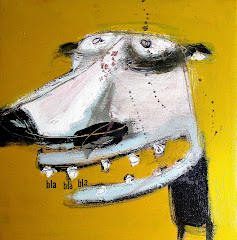
BLA...BLA...BLA...
by MARU MARCHESOTTI


12.10.09

12 DE OCTUBRE (II)
.
.
.
Latin American Visual Art :
Independence to the Present
FUENTE : GUSTAVO FARES
(Artista Invitado-Asociado al EQUIPO - GC )
faresg@lawrence.edu
Required Texts
Handouts in reserve at Library
Images are available @: U:\Class_Share\spanish\SPAN576
Recommended TextsTate Glossary: http://www.tate.org.uk/collections/glossary/
Bibliography
Ades, Dawn. Art in Latin America: the modern era, 1820-1980. Haven: Yale University Press, 1989.
Amador Gómez-Quintero, Raysa Elena and Mireya Pérez Bustillo. The female body: perspectives of Latin American artists. Westport, Conn.: Greenwood Press, 2002.
Baddeley, Oriana and Valerie Fraser. Drawing the line: art and cultural identity in contemporary Latin America. London; New York: Verso, 1989.
Barnitz, Jacqueline. Twentieth-century art of Latin America. Austin: University of Texas Press, 2001.
Bethell, Leslie. A cultural history of Latin America: literature, music, and the visual arts in the 19th and 20th centuries. Cambridge; Cambridge University Press, 1999.
Cockcroft, James D. y Jane Canning Latino Visions: Contemporary Chicano, Puerto Rican, and Cuban American Artists. New York: Franklin Watts, 2000.
Fletcher, Valerie. Crosscurrents of Modernism. Four Latin American Pioneers. Diego Rivera, Joaquín Torres García, Wilfredo Lam, Matta. Washington, D.C.: Hishhorn Museum, 1992.
Gutiérrez, Ramón, and Rodrigo Gutiérrez Viñuales. Historia del arte iberoamericano. España: Lunwerg, 2000.
Lindsay, Arturo. Santería aesthetics in contemporary Latin American art. Washington: Smithsonian Institution Press, 1996.
Oettinger, Marion Miguel Bretos, Carolyn Carr, Elizabeth Benson. Retratos: 2,000 Years of Latin American Portraits. San Diego: San Diego Museum of Art, 2005.
Ramírez, Mari Carmen and Héctor Olea. Inverted utopias: avant-garde art in Latin America. New Haven: Yale University Press, 2004.
Course Description
A broad introduction to Latin American cultures through its visual arts. The course surveys major movements and artists in Latin American art from the early nineteenth-century to the present, alongside selected literary and documentary texts and films. Slide-based lectures will be accompanied by the discussion of visuals and thematically related texts (i.e. biographies, letters, scholarly articles on the topic), and carefully selected fragments of videos.
GER1. Diversity Requirement II.1: Global Perspectives and Issues
For category II.1, at least half the course must be devoted to the study of global perspectives and issues or to the study of areas outside of Europe and the United States. "Global" in this context refers to the perspectives of multiple and diverse regions of the world and to issues currently of importance to those regions (e.g., poverty, the environment, religion, and so on). This requirement may be met in appropriate study abroad programs, as determined by the Curriculum Committee.
2. Speaking-Intensive Course Requirement
Courses included on a list of speaking-intensive courses would be expected to satisfy the following criteria:
Speaking-intensive courses must be small, enrolling no more than approximately 20 students per instructor.
In such courses, at least 25% of the final grade must be based on evaluated oral work.
Speaking-intensive courses must require students to do a substantial amount of speaking, much of it evaluated by the instructor, with opportunities to develop speaking skills distributed over the course of the term.
Speaking-intensive courses must provide explicit instruction in speaking.
It is important for students to speak about art in class for three basic reasons: 1. as a way of applying the concepts learned; 2. as a means to take ownership of the material; 3. to practice the language in a formal setting and in a presentation register. Oral activities for this course will take the form of formal presentations, group discussions, class discussion and debates. The overarching goal of these activities is provide students with ample opportunity to explore the oral communication and learn how to organize and deliver an oral report.
GRADE Distribution
Students will be evaluated on their successful completion of the following:Class work / Homework 20%Oral presentation 20 %Journal 10%Exam 1 25 % Exam 2 25 %EXPECTATIONS FOR CLASS WORK AND HOMEWORK 20%
Students should familiarize themselves with all terms, descriptions, concepts, and the like of a reading selection. They should be ready to participate in class discussion in an engaging way, as well as doing their homework on time. The instructor is a strong believer that an excellent class includes the combination of an enthusiastic and informed teacher and student interaction. Students are expected to actively participate in oral discussions, sharing their homework, views, and informed opinions with the rest of the class.
ORAL PRESENTATION 20%
That will require students to research certain course-related topics and to formally share their findings.
The students will first consult with the instructor about their presentations and ask about any doubts they may have about the subject matter at hand.
The presentations will be scheduled during WEEK ONE.
After the formal presentation, students will be in charge of generating and mediating a class discussion; BE PREPARED.
After the presentation, the students will get feedback from the instructor. The presentation will be graded in terms of :
Effectiveness in conveying the matter at hand (20 %) (this part will take into account also voice, body language, clarity of expression, and the like);
Accuracy and completeness of content (40%);
Correct and accurate use of Spanish (40%)
Individual presentation.
10’ long (not half the class period!)
Topic assigned from the syllabus and previously discussed with the instructor.
You will discuss a particular topic, your research and ideas on it (not your feelings and emotions). You will be expected to provide an introduction, develop the arguments, draw a conclusion, and conduct a brief class discussion on the matter thorough questions that you will have prepared.
You should think of this assignment in a way similar as when you do written assignments.
EXAMSExam 1The first exam will cover the material from the preceding half of the course. It will consist of essay questions and identifications. 25%
Exam 2 The second exam will cover the material from the Exam 1 onwards. It will include identifications and essay questions that will require you to synthesize some of the major themes of the course. 25%
JOURNAL 10 %Each student will have a reading journal. The journal will have a summary of the reading for the class, a list of 5 to 10 words that the student wants to know more about, and two questions, that will be shared in class. The journal will be checked periodically not for accuracy, but for completion.
EXTRA CREDIT AVAILABLE
Participation in Cultural Activity and written reports, for up to 5 % (1 point for each activity) (see separate handout describing the cultural activity requirements; handouts are also available online on the departmental website).
DEPARTMENTAL ATTENDANCE POLICY3 (three) absences are allowed during the term; each absence in excess of 3 will lower your participation grade / score by 10% percentage points each. Tardiness (being late) will be treated as 1/2 absence each time and will affect the participation score. Exceptions MAY be made when sports events take more than 3 classes and/or the student is sick. In both cases, an official note from a coach or the nurse must be presented.
GRADE DISTRIBUTION:
A 100-93 C+ 79-78A- 92-90 C 77-73B+ 89-88 C- 72-70B 87-83 D+ 69-68B- 82-80 D 67-63D- 62-60F 59 and Below
UNIT 1: What is "Latin"? The Nineteenth Century: Spanish heritage, other contributions
I like to propose riddles or "situational definitions of identity" to my students.
· Riddle # 1: I am a blue eyed, Caucasian woman. My parents were born in Germany and later on they settled in a German community in Paraguay. I was born and raised in Asunción del Paraguay but I went to a German school, spoke German at home, watched German movies, and while growing up spent my summer vacations in Germany. I don’t speak Spanish other than when I have to. I later emigrated to the U.S. Am I Latin?
· Riddle # 2: I was born in the Peruvian Amazon Region; my family is indigenous to the area. When I was a boy, my parents moved to Piura, on the coast, where I was educated in the public school system. I speak my native indigenous language as well as Spanish. Am I Latin?
· Riddle # 3: As everyone else in my family, I am part African, part European, part Jew, part Catholic, part Arab, in other words, I am a Spaniard. Am I Latin also?
What are the solutions, if any, to these riddles? Or, to put it differently, what does the term Latin, as used in the U.S., mean? Is it just a name that characterizes all Spanish-speaking peoples and cultures? Is it a label related to matters of race? Education? Language? Ethnia? A characteristic only relevant in the U.S. culture? All of the above? None? Of course, as other social categories, Latin identities are culturally constructed and, as such, they change according to who does the constructions, to what ends they are used, and in what contexts they are understood. Contemporary writing about Latin culture in the U.S. is full of rich metaphors that reflect the fluid character of those cultural constructions. The metaphors go from the "remapping of cultural terrains" to the "(de)construction of physical borders and historical bridges," to a "deterritorialization of the mainstreams," to name but three examples. These images are not exclusive of Latin communities and realities, but are apt to express their dilemmas and current struggles, which can be traced to the notion of identity: who are they/we? These questions are not entirely new although the ways in which I propose to treat them and the audience to which they will be directed are.
Besides sharing a common history and a number of territorial diversities, what else characterizes these communities? Geography and history have always played a role in defining the three "hispanidades" or latinidades: the Latin communities in the U.S., in Latin America and in Spain. The diverse origins of these groups are accompanied by a similar racial, political, and cultural diversity among them. These communities are as ethnically, racially, culturally and socio economically heterogeneous as the more precise names they prefer: mexicanos, puertorriqueños, salvadoreños, argentinos, colombianos, and so on. In the course, we will examine those communities through their visual arts, which will serve as a window to better understand their identities, politics, history, and societies. In order to carry out this examination, we will resort to the three heuristic levels proposed by Jameson and described in the introduction to this proposal: we will consider the works of art in themselves, in the society of their times and within a larger historical perspective. In these ways, cultural artifacts, artists, and movements will be the tools that would allow us to enter the Latin American cultures, understanding from within and within the context of a more comprehensive cultural context.
Latin America, whichever way one chooses to define it, is not a culturally homogeneous continent; it was not such before the Spaniards arrived, it was not such after 400 of colonial rule, it is not such now-a-days. To be able to understand the visual arts in the continent, we must consider not only the Spanish legacy, but also that of subordinate and/or marginal groups, such as indigenous, African-American, and immigrant peoples, and their contributions to the visual arts and to the history of the continent.
The images that accompany this part of the course present the Baroque, Mudejar, and Churrigueresco movements and styles, and also highlight the native and African-american contributions to the Latin American cultures within the Spanish Empire.
UNIT 2: Independence and the New Republics
During the colonial period, the psychology of the Latin American élites changed significantly, from a feeling of pride and ambition to one of inferiority and resentment. This feeling, coupled with the liberation of the United States and Haiti from the colonial rule, the European situation, the Napoleonic invasion, and the new ideas coming from France created "the perfect storm" climate that led to the independence period in the continent. Political independence meant, for the most part, a change of élites, from European ones to ones born in the continent, but there was little in the way of political change for the majority of the Latin American population. Culturally, the story was not very different. The center of influence changed from Madrid to Paris and London. Nonetheless, the model continued being European, and it was so for a long time. As in politics, the change of hegemonic centers of power did not mean the spread of culture to the masses, which came very slowly and after the post-independence civil wars ended. Throughout this period, the process of nation-creation and nation-building, examined by Benedict Anderson, finds its visual representation in the European models, which provided the imagery to present and represent the new nations to the world. The task was undertaken officially by the nations’ Academies which, modeled following French institutions, produced artists and schools of painting that depicted the new nations and their newly gained independence. To the interest in portraiture, characteristic of the independence period, it followed an impetus to represent the vistas of the republics and their peoples. European cultural movements provided, once again, the aesthetic means for these representations, as foreign travelers and native artists created new images for the new countries.
The pictures that accompany this part of the course present examples of the movements and artists working in Latin America between the 1810s and the 1880s, and provide examples of the ways in which the peoples and political institutions represented themselves, as Latin Americans, through European models.
UNIT 3: Beginnings of the Twentieth Century: Modernismo and Avant – Gardes (1920’s)
By the turn of the century, the academic model was being rejected by many independent artists in Latin America. That did not mean, however, that the European influence was also out of favor; on the contrary, the break with academicism was a reflection of what taking place in Europe at the time. The many European "isms" and avant-garde movements of the end of the Nineteenth century and beginnings of the Twentieth arrived together at Latin America, a fact that created a milieu where new and original dialogues and correspondences were created, many of which entirely original to the continent. In addition to the European cultural movements and the many synthesis thus created, Latin America in this period worked out its own original form of expression, the "Modernismo," which in literature produced figures such as Ruben Dario and in the visual arts, many of the artists represented in the images of this portion of the course. "Modernismo" did not develop in a vacuum, however; it corresponded to a rapid urbanization and industrialization in Latin American societies, a pride in national identities, a celebration of the first century of independence (such as Argentinean’s 1910 anniversary), and to a massive efforts to alphabetize the populations. The emphasis on education created a need for images that would represent the countries’ identities and help educate the populace. But these images were produced by and for cultural elites, whose aesthetic tastes were not necessarily related to their surroundings, mundane situations, or political and popular movements.
UNIT 4: Reaction to Aestheticism. Political and Social Art. National vs. Cosmopolitan Identities (1930’s-40’s)
This period was marked by the cultural and artistic currents embodied in two art currents: social and nativist art and constructivism. As a reaction against the aestheticism that dominated the first decades of the twentieth century, several artists, with the active support of the state, as in the case of Mexico, developed a socially engaged and nativist art out of concerns for the problems urbanization and industrialization were generating in the Latin American societies.. The nativist and popular engagement of these artists were also means to develop a national identity that would take into account not just the images favored by the élites, but those related to the majority of the populations. In some countries, such as in Mexico, Ecuador, Peru, and Bolivia, those populations were in their majority, of indigenous origins. Despite their names, social and nativist art was not a unified phenomenon, but ones that were embodied in different images in the different countries, a series of styles unified by their concern with the populace, their needs, and aspirations. In Mexico those concerns were expressed in the muralist movement and in the prints of Guadalupe Posada, among others. In Argentina, in Antonio Berni’s collages, in Brazil, in Candido Portinari’s depictions of peasants and African-Americans. In the countries where the indigenous populations were the majority, the attempt to educate and bring them to the democratic process many times collided with the nation’s geographic borders and with some of the dictatorial politics of their governments. Art responded in, at least, two ways to these conflicts: on the one hand, by idealizing the past, rather than paying attention to the present problems; on the other, by making itself overtly political, depicting in realistic art-styles the conditions endured by the lower classes. The second artistic current we identified in the 1930’s and 1940’s was exemplified in Joaquín Torres García’s School of the South and in the Concrete art that begun in Brazil and was soon taken up in the Southern Cone countries.
UNIT 5: The legacy of the Avant-Gardes (1940’s and 1950’s)
The avant-garde movements, which by the end of WWII had already started to loose control of the cultural agenda in Europe, continued in Latin America in two different styles, which in many ways dominated the visual arts of the continent until the mid 1950’s: geometric abstraction and surrealism. Since the 1940 a notable number of Latin American artists had taken up some variation of geometric art which fulfilled two seemingly contradictory purposes: on the one proclaimed the "modern" views of the continent while, at the same time, allowed the artists that used these forms to claim a link with the pre-Hispanic, indigenous, past and their aesthetic representations. This interest in geometry is clear in Torres García’s work, but it is also the driving force of the Brazilian and Argentinean Concrete and Neo-Concrete art of the sixties and seventies. The second current in the visual arts of this period, was surrealism. Although present in the continent since the end of WWI, albeit not in its orthodox manifestation proclaimed by Breton when he visited Mexico in 1938, the surrealist imagery many times was used in conjunction with other styles to depict topics that were not strictly speaking "surreal," such as political art, as in Portinari’s case or in Raquel Forner’s Spanish Civil-War paintings. But, even if not always orthodox, Surrealism and its imagery had a long presence in the continent, through he works of a group of Mexican women (Kahlo, Varo, Carrington, Izquierdo), as well as others artists, in almost all of the Latin American countries. After WWII this style, with its emphasis on the irrational elements of life, was an appropriate conduit to express the calamities the world had just experienced as well as the frustrations felt by the marginal populations, especially women and blacks, in their societies. In fact, both styles, geometric abstraction and Surrealism, with their escapism to the aesthetic, the imagination, and the subconscious were perhaps the only responses artists could find in the post-war years when the dictatorial regimes (Peron in Argentina or Stroessner in Paraguay), the predominance of the United States, and the beginning of the Cold War, made evident that the social inequalities of the past, which so many thought were going to be superseded by a new democratization, proved they were there to stay. The failure to develop at the speed and to the extent desired by the Latin American populations created a widespread disillusionment with democracy and capitalism which, coupled with desperation and poverty, sparked the violence that prevailed in the politics and societies in the next decades and that were reflected in the images produced.
UNIT 6: The Second Half of the Twentieth Century I: Abstraction to Concrete Art (1950’s-1960’s)
After WWII a rapid change occurred from surrealist figuration and utopian Constructivism to informal abstraction and abstract art. The founding of new art museums in the preceding decades as well as the 1951 Sao Paulo Biennal, were key events in these transformations. If Mexican muralists and Andean indigenists had helped define the image that reflected Latin American identities in the preceding decades, abstraction, both geometric and informal, dominated the 1950s and 1960’s in the continent. Abstraction however, had no identity, and the artists still interested on the topics of national identity tried to integrate the new language to their ideological needs. The modes of abstraction differed from country to country, sometimes being applied to culturally relevant images, other times to a sort of "international style" that had no roots in any particular society. The many titles abstraction took (Concrete art, Neo-concrete art, Madi, Optical and kinetic art, Cinetismo, etc.) attest to this diversity within similar aesthetic parameters. Several biennals in Latin America and abroad, coupled with the new style, contributed to an increasing visibility of Latin American artists. But the political conditions in several of these countries contributed to making this newly found abstraction a convenient style for the official cultural policies of some of the region’s governments. The political discontent that had begun in the previous decades, the Cold War and the Cuban Revolution (1959) gave origin to guerrilla movements, which in turn brought about dictatorial and military regimes and censorship. These conditions made it very difficult for artists, curators, museums, and public, to be clear about the message of the art works and their political meanings; abstraction provided the ideal vehicle not to be censored and to be allowed to exhibit the works. The political images that existed at the time were being taken up by a seminal conceptualism (it was not even called such) and by early forms of Pop.
UNIT 7: The Second Half of the Twentieth Century II: Pop to the Present.
By the end of the 1960’s abstraction had been accepted in the entire continent but failed to fulfill the needs of artists, institutions and public that wanted an expressive form of art that incorporated the figure and a recognizable, figurative, theme. The artist, though, did not want to return to the social and political figuration of the past but sought instead to portray the contemporary condition of the urban dweller using new images and forms. They used ideas from Europe and the US, especially those coming in the form of Pop art, Neo-figuration, environments and performances. These movements took different forms in the different countries, where political regimes, especially since the 1980s, tended to be more democratic that in the past two decades, and where foreign corporate capital started to support the arts as a way to market their image more efficiently to the public. The use of Pop and the prevalence of new movements did not mean that there was no political art at all. On the contrary, the political art was in the forefront of artistic expression, with Conceptual art and its transcendence of the art-object altogether and its use of ephemeral media. Conceptualism was not new in the continent, but it became a major player in the art-world from the 1970s on.
In the 1980’s, as it happened in other areas of the world, art took a variety of directions, a phenomenon sometimes referred as "pluralism", which makes it somewhat difficult to talk about trends and movements; instead, attention is often directed to individual artists, even to individual works. In addition to political topics, art themes include individual alienation, urban violence, drug trafficking, governmental corruption, and expressions of once- marginalized populations, such as lesbians, gays, and indigenous peoples and their struggle for equal rights. The globalization of information that accelerated its spread since the 1980’s has also meant that styles, when they exist, tend to be short lived, used for particular purposes, and very easily copied and appropriated. The "pluralism" that results from this ubiquitous flow of information makes it hard to even talk about a "Latin American" art and, given this difficulty, it seems that the challenge of the next decades would be to reconfigure the places where one lives as well as the visual expressions that define them in such a way that their representations can be both particular and universal.
UNIT 8: Other Arts. Conclusions
Even though we have emphasized "mainstream" art forms, before concluding the seminar it may be useful to focus our attention in other art forms, such as architecture, photography, and film, as they have developed in the continent. What we have discussed so far will make it easier to relate these media to the culture and the arts in general, but it may also fruitful to study their particular contributions to the culture of the continent. Architecture, photography, and film have in common being "easily" accessible by the public at large: architecture, because it is generally based on spaces where the people can circulate in, and because it depends on large influxes of capital, as it is the case of Brazilia; film and photography, because their reproducible character allows them to circulate at faster and wider rates in the societies that consume them. The images included in this part of the course offer examples of these three art forms that would make it easier to relate them to the rest of the materials.
.
.
.
.
.
Latin American Visual Art :
Independence to the Present
FUENTE : GUSTAVO FARES
(Artista Invitado-Asociado al EQUIPO - GC )
faresg@lawrence.edu
Required Texts
Handouts in reserve at Library
Images are available @: U:\Class_Share\spanish\SPAN576
Recommended TextsTate Glossary: http://www.tate.org.uk/collections/glossary/
Bibliography
Ades, Dawn. Art in Latin America: the modern era, 1820-1980. Haven: Yale University Press, 1989.
Amador Gómez-Quintero, Raysa Elena and Mireya Pérez Bustillo. The female body: perspectives of Latin American artists. Westport, Conn.: Greenwood Press, 2002.
Baddeley, Oriana and Valerie Fraser. Drawing the line: art and cultural identity in contemporary Latin America. London; New York: Verso, 1989.
Barnitz, Jacqueline. Twentieth-century art of Latin America. Austin: University of Texas Press, 2001.
Bethell, Leslie. A cultural history of Latin America: literature, music, and the visual arts in the 19th and 20th centuries. Cambridge; Cambridge University Press, 1999.
Cockcroft, James D. y Jane Canning Latino Visions: Contemporary Chicano, Puerto Rican, and Cuban American Artists. New York: Franklin Watts, 2000.
Fletcher, Valerie. Crosscurrents of Modernism. Four Latin American Pioneers. Diego Rivera, Joaquín Torres García, Wilfredo Lam, Matta. Washington, D.C.: Hishhorn Museum, 1992.
Gutiérrez, Ramón, and Rodrigo Gutiérrez Viñuales. Historia del arte iberoamericano. España: Lunwerg, 2000.
Lindsay, Arturo. Santería aesthetics in contemporary Latin American art. Washington: Smithsonian Institution Press, 1996.
Oettinger, Marion Miguel Bretos, Carolyn Carr, Elizabeth Benson. Retratos: 2,000 Years of Latin American Portraits. San Diego: San Diego Museum of Art, 2005.
Ramírez, Mari Carmen and Héctor Olea. Inverted utopias: avant-garde art in Latin America. New Haven: Yale University Press, 2004.
Course Description
A broad introduction to Latin American cultures through its visual arts. The course surveys major movements and artists in Latin American art from the early nineteenth-century to the present, alongside selected literary and documentary texts and films. Slide-based lectures will be accompanied by the discussion of visuals and thematically related texts (i.e. biographies, letters, scholarly articles on the topic), and carefully selected fragments of videos.
GER1. Diversity Requirement II.1: Global Perspectives and Issues
For category II.1, at least half the course must be devoted to the study of global perspectives and issues or to the study of areas outside of Europe and the United States. "Global" in this context refers to the perspectives of multiple and diverse regions of the world and to issues currently of importance to those regions (e.g., poverty, the environment, religion, and so on). This requirement may be met in appropriate study abroad programs, as determined by the Curriculum Committee.
2. Speaking-Intensive Course Requirement
Courses included on a list of speaking-intensive courses would be expected to satisfy the following criteria:
Speaking-intensive courses must be small, enrolling no more than approximately 20 students per instructor.
In such courses, at least 25% of the final grade must be based on evaluated oral work.
Speaking-intensive courses must require students to do a substantial amount of speaking, much of it evaluated by the instructor, with opportunities to develop speaking skills distributed over the course of the term.
Speaking-intensive courses must provide explicit instruction in speaking.
It is important for students to speak about art in class for three basic reasons: 1. as a way of applying the concepts learned; 2. as a means to take ownership of the material; 3. to practice the language in a formal setting and in a presentation register. Oral activities for this course will take the form of formal presentations, group discussions, class discussion and debates. The overarching goal of these activities is provide students with ample opportunity to explore the oral communication and learn how to organize and deliver an oral report.
GRADE Distribution
Students will be evaluated on their successful completion of the following:Class work / Homework 20%Oral presentation 20 %Journal 10%Exam 1 25 % Exam 2 25 %EXPECTATIONS FOR CLASS WORK AND HOMEWORK 20%
Students should familiarize themselves with all terms, descriptions, concepts, and the like of a reading selection. They should be ready to participate in class discussion in an engaging way, as well as doing their homework on time. The instructor is a strong believer that an excellent class includes the combination of an enthusiastic and informed teacher and student interaction. Students are expected to actively participate in oral discussions, sharing their homework, views, and informed opinions with the rest of the class.
ORAL PRESENTATION 20%
That will require students to research certain course-related topics and to formally share their findings.
The students will first consult with the instructor about their presentations and ask about any doubts they may have about the subject matter at hand.
The presentations will be scheduled during WEEK ONE.
After the formal presentation, students will be in charge of generating and mediating a class discussion; BE PREPARED.
After the presentation, the students will get feedback from the instructor. The presentation will be graded in terms of :
Effectiveness in conveying the matter at hand (20 %) (this part will take into account also voice, body language, clarity of expression, and the like);
Accuracy and completeness of content (40%);
Correct and accurate use of Spanish (40%)
Individual presentation.
10’ long (not half the class period!)
Topic assigned from the syllabus and previously discussed with the instructor.
You will discuss a particular topic, your research and ideas on it (not your feelings and emotions). You will be expected to provide an introduction, develop the arguments, draw a conclusion, and conduct a brief class discussion on the matter thorough questions that you will have prepared.
You should think of this assignment in a way similar as when you do written assignments.
EXAMSExam 1The first exam will cover the material from the preceding half of the course. It will consist of essay questions and identifications. 25%
Exam 2 The second exam will cover the material from the Exam 1 onwards. It will include identifications and essay questions that will require you to synthesize some of the major themes of the course. 25%
JOURNAL 10 %Each student will have a reading journal. The journal will have a summary of the reading for the class, a list of 5 to 10 words that the student wants to know more about, and two questions, that will be shared in class. The journal will be checked periodically not for accuracy, but for completion.
EXTRA CREDIT AVAILABLE
Participation in Cultural Activity and written reports, for up to 5 % (1 point for each activity) (see separate handout describing the cultural activity requirements; handouts are also available online on the departmental website).
DEPARTMENTAL ATTENDANCE POLICY3 (three) absences are allowed during the term; each absence in excess of 3 will lower your participation grade / score by 10% percentage points each. Tardiness (being late) will be treated as 1/2 absence each time and will affect the participation score. Exceptions MAY be made when sports events take more than 3 classes and/or the student is sick. In both cases, an official note from a coach or the nurse must be presented.
GRADE DISTRIBUTION:
A 100-93 C+ 79-78A- 92-90 C 77-73B+ 89-88 C- 72-70B 87-83 D+ 69-68B- 82-80 D 67-63D- 62-60F 59 and Below
UNIT 1: What is "Latin"? The Nineteenth Century: Spanish heritage, other contributions
I like to propose riddles or "situational definitions of identity" to my students.
· Riddle # 1: I am a blue eyed, Caucasian woman. My parents were born in Germany and later on they settled in a German community in Paraguay. I was born and raised in Asunción del Paraguay but I went to a German school, spoke German at home, watched German movies, and while growing up spent my summer vacations in Germany. I don’t speak Spanish other than when I have to. I later emigrated to the U.S. Am I Latin?
· Riddle # 2: I was born in the Peruvian Amazon Region; my family is indigenous to the area. When I was a boy, my parents moved to Piura, on the coast, where I was educated in the public school system. I speak my native indigenous language as well as Spanish. Am I Latin?
· Riddle # 3: As everyone else in my family, I am part African, part European, part Jew, part Catholic, part Arab, in other words, I am a Spaniard. Am I Latin also?
What are the solutions, if any, to these riddles? Or, to put it differently, what does the term Latin, as used in the U.S., mean? Is it just a name that characterizes all Spanish-speaking peoples and cultures? Is it a label related to matters of race? Education? Language? Ethnia? A characteristic only relevant in the U.S. culture? All of the above? None? Of course, as other social categories, Latin identities are culturally constructed and, as such, they change according to who does the constructions, to what ends they are used, and in what contexts they are understood. Contemporary writing about Latin culture in the U.S. is full of rich metaphors that reflect the fluid character of those cultural constructions. The metaphors go from the "remapping of cultural terrains" to the "(de)construction of physical borders and historical bridges," to a "deterritorialization of the mainstreams," to name but three examples. These images are not exclusive of Latin communities and realities, but are apt to express their dilemmas and current struggles, which can be traced to the notion of identity: who are they/we? These questions are not entirely new although the ways in which I propose to treat them and the audience to which they will be directed are.
Besides sharing a common history and a number of territorial diversities, what else characterizes these communities? Geography and history have always played a role in defining the three "hispanidades" or latinidades: the Latin communities in the U.S., in Latin America and in Spain. The diverse origins of these groups are accompanied by a similar racial, political, and cultural diversity among them. These communities are as ethnically, racially, culturally and socio economically heterogeneous as the more precise names they prefer: mexicanos, puertorriqueños, salvadoreños, argentinos, colombianos, and so on. In the course, we will examine those communities through their visual arts, which will serve as a window to better understand their identities, politics, history, and societies. In order to carry out this examination, we will resort to the three heuristic levels proposed by Jameson and described in the introduction to this proposal: we will consider the works of art in themselves, in the society of their times and within a larger historical perspective. In these ways, cultural artifacts, artists, and movements will be the tools that would allow us to enter the Latin American cultures, understanding from within and within the context of a more comprehensive cultural context.
Latin America, whichever way one chooses to define it, is not a culturally homogeneous continent; it was not such before the Spaniards arrived, it was not such after 400 of colonial rule, it is not such now-a-days. To be able to understand the visual arts in the continent, we must consider not only the Spanish legacy, but also that of subordinate and/or marginal groups, such as indigenous, African-American, and immigrant peoples, and their contributions to the visual arts and to the history of the continent.
The images that accompany this part of the course present the Baroque, Mudejar, and Churrigueresco movements and styles, and also highlight the native and African-american contributions to the Latin American cultures within the Spanish Empire.
UNIT 2: Independence and the New Republics
During the colonial period, the psychology of the Latin American élites changed significantly, from a feeling of pride and ambition to one of inferiority and resentment. This feeling, coupled with the liberation of the United States and Haiti from the colonial rule, the European situation, the Napoleonic invasion, and the new ideas coming from France created "the perfect storm" climate that led to the independence period in the continent. Political independence meant, for the most part, a change of élites, from European ones to ones born in the continent, but there was little in the way of political change for the majority of the Latin American population. Culturally, the story was not very different. The center of influence changed from Madrid to Paris and London. Nonetheless, the model continued being European, and it was so for a long time. As in politics, the change of hegemonic centers of power did not mean the spread of culture to the masses, which came very slowly and after the post-independence civil wars ended. Throughout this period, the process of nation-creation and nation-building, examined by Benedict Anderson, finds its visual representation in the European models, which provided the imagery to present and represent the new nations to the world. The task was undertaken officially by the nations’ Academies which, modeled following French institutions, produced artists and schools of painting that depicted the new nations and their newly gained independence. To the interest in portraiture, characteristic of the independence period, it followed an impetus to represent the vistas of the republics and their peoples. European cultural movements provided, once again, the aesthetic means for these representations, as foreign travelers and native artists created new images for the new countries.
The pictures that accompany this part of the course present examples of the movements and artists working in Latin America between the 1810s and the 1880s, and provide examples of the ways in which the peoples and political institutions represented themselves, as Latin Americans, through European models.
UNIT 3: Beginnings of the Twentieth Century: Modernismo and Avant – Gardes (1920’s)
By the turn of the century, the academic model was being rejected by many independent artists in Latin America. That did not mean, however, that the European influence was also out of favor; on the contrary, the break with academicism was a reflection of what taking place in Europe at the time. The many European "isms" and avant-garde movements of the end of the Nineteenth century and beginnings of the Twentieth arrived together at Latin America, a fact that created a milieu where new and original dialogues and correspondences were created, many of which entirely original to the continent. In addition to the European cultural movements and the many synthesis thus created, Latin America in this period worked out its own original form of expression, the "Modernismo," which in literature produced figures such as Ruben Dario and in the visual arts, many of the artists represented in the images of this portion of the course. "Modernismo" did not develop in a vacuum, however; it corresponded to a rapid urbanization and industrialization in Latin American societies, a pride in national identities, a celebration of the first century of independence (such as Argentinean’s 1910 anniversary), and to a massive efforts to alphabetize the populations. The emphasis on education created a need for images that would represent the countries’ identities and help educate the populace. But these images were produced by and for cultural elites, whose aesthetic tastes were not necessarily related to their surroundings, mundane situations, or political and popular movements.
UNIT 4: Reaction to Aestheticism. Political and Social Art. National vs. Cosmopolitan Identities (1930’s-40’s)
This period was marked by the cultural and artistic currents embodied in two art currents: social and nativist art and constructivism. As a reaction against the aestheticism that dominated the first decades of the twentieth century, several artists, with the active support of the state, as in the case of Mexico, developed a socially engaged and nativist art out of concerns for the problems urbanization and industrialization were generating in the Latin American societies.. The nativist and popular engagement of these artists were also means to develop a national identity that would take into account not just the images favored by the élites, but those related to the majority of the populations. In some countries, such as in Mexico, Ecuador, Peru, and Bolivia, those populations were in their majority, of indigenous origins. Despite their names, social and nativist art was not a unified phenomenon, but ones that were embodied in different images in the different countries, a series of styles unified by their concern with the populace, their needs, and aspirations. In Mexico those concerns were expressed in the muralist movement and in the prints of Guadalupe Posada, among others. In Argentina, in Antonio Berni’s collages, in Brazil, in Candido Portinari’s depictions of peasants and African-Americans. In the countries where the indigenous populations were the majority, the attempt to educate and bring them to the democratic process many times collided with the nation’s geographic borders and with some of the dictatorial politics of their governments. Art responded in, at least, two ways to these conflicts: on the one hand, by idealizing the past, rather than paying attention to the present problems; on the other, by making itself overtly political, depicting in realistic art-styles the conditions endured by the lower classes. The second artistic current we identified in the 1930’s and 1940’s was exemplified in Joaquín Torres García’s School of the South and in the Concrete art that begun in Brazil and was soon taken up in the Southern Cone countries.
UNIT 5: The legacy of the Avant-Gardes (1940’s and 1950’s)
The avant-garde movements, which by the end of WWII had already started to loose control of the cultural agenda in Europe, continued in Latin America in two different styles, which in many ways dominated the visual arts of the continent until the mid 1950’s: geometric abstraction and surrealism. Since the 1940 a notable number of Latin American artists had taken up some variation of geometric art which fulfilled two seemingly contradictory purposes: on the one proclaimed the "modern" views of the continent while, at the same time, allowed the artists that used these forms to claim a link with the pre-Hispanic, indigenous, past and their aesthetic representations. This interest in geometry is clear in Torres García’s work, but it is also the driving force of the Brazilian and Argentinean Concrete and Neo-Concrete art of the sixties and seventies. The second current in the visual arts of this period, was surrealism. Although present in the continent since the end of WWI, albeit not in its orthodox manifestation proclaimed by Breton when he visited Mexico in 1938, the surrealist imagery many times was used in conjunction with other styles to depict topics that were not strictly speaking "surreal," such as political art, as in Portinari’s case or in Raquel Forner’s Spanish Civil-War paintings. But, even if not always orthodox, Surrealism and its imagery had a long presence in the continent, through he works of a group of Mexican women (Kahlo, Varo, Carrington, Izquierdo), as well as others artists, in almost all of the Latin American countries. After WWII this style, with its emphasis on the irrational elements of life, was an appropriate conduit to express the calamities the world had just experienced as well as the frustrations felt by the marginal populations, especially women and blacks, in their societies. In fact, both styles, geometric abstraction and Surrealism, with their escapism to the aesthetic, the imagination, and the subconscious were perhaps the only responses artists could find in the post-war years when the dictatorial regimes (Peron in Argentina or Stroessner in Paraguay), the predominance of the United States, and the beginning of the Cold War, made evident that the social inequalities of the past, which so many thought were going to be superseded by a new democratization, proved they were there to stay. The failure to develop at the speed and to the extent desired by the Latin American populations created a widespread disillusionment with democracy and capitalism which, coupled with desperation and poverty, sparked the violence that prevailed in the politics and societies in the next decades and that were reflected in the images produced.
UNIT 6: The Second Half of the Twentieth Century I: Abstraction to Concrete Art (1950’s-1960’s)
After WWII a rapid change occurred from surrealist figuration and utopian Constructivism to informal abstraction and abstract art. The founding of new art museums in the preceding decades as well as the 1951 Sao Paulo Biennal, were key events in these transformations. If Mexican muralists and Andean indigenists had helped define the image that reflected Latin American identities in the preceding decades, abstraction, both geometric and informal, dominated the 1950s and 1960’s in the continent. Abstraction however, had no identity, and the artists still interested on the topics of national identity tried to integrate the new language to their ideological needs. The modes of abstraction differed from country to country, sometimes being applied to culturally relevant images, other times to a sort of "international style" that had no roots in any particular society. The many titles abstraction took (Concrete art, Neo-concrete art, Madi, Optical and kinetic art, Cinetismo, etc.) attest to this diversity within similar aesthetic parameters. Several biennals in Latin America and abroad, coupled with the new style, contributed to an increasing visibility of Latin American artists. But the political conditions in several of these countries contributed to making this newly found abstraction a convenient style for the official cultural policies of some of the region’s governments. The political discontent that had begun in the previous decades, the Cold War and the Cuban Revolution (1959) gave origin to guerrilla movements, which in turn brought about dictatorial and military regimes and censorship. These conditions made it very difficult for artists, curators, museums, and public, to be clear about the message of the art works and their political meanings; abstraction provided the ideal vehicle not to be censored and to be allowed to exhibit the works. The political images that existed at the time were being taken up by a seminal conceptualism (it was not even called such) and by early forms of Pop.
UNIT 7: The Second Half of the Twentieth Century II: Pop to the Present.
By the end of the 1960’s abstraction had been accepted in the entire continent but failed to fulfill the needs of artists, institutions and public that wanted an expressive form of art that incorporated the figure and a recognizable, figurative, theme. The artist, though, did not want to return to the social and political figuration of the past but sought instead to portray the contemporary condition of the urban dweller using new images and forms. They used ideas from Europe and the US, especially those coming in the form of Pop art, Neo-figuration, environments and performances. These movements took different forms in the different countries, where political regimes, especially since the 1980s, tended to be more democratic that in the past two decades, and where foreign corporate capital started to support the arts as a way to market their image more efficiently to the public. The use of Pop and the prevalence of new movements did not mean that there was no political art at all. On the contrary, the political art was in the forefront of artistic expression, with Conceptual art and its transcendence of the art-object altogether and its use of ephemeral media. Conceptualism was not new in the continent, but it became a major player in the art-world from the 1970s on.
In the 1980’s, as it happened in other areas of the world, art took a variety of directions, a phenomenon sometimes referred as "pluralism", which makes it somewhat difficult to talk about trends and movements; instead, attention is often directed to individual artists, even to individual works. In addition to political topics, art themes include individual alienation, urban violence, drug trafficking, governmental corruption, and expressions of once- marginalized populations, such as lesbians, gays, and indigenous peoples and their struggle for equal rights. The globalization of information that accelerated its spread since the 1980’s has also meant that styles, when they exist, tend to be short lived, used for particular purposes, and very easily copied and appropriated. The "pluralism" that results from this ubiquitous flow of information makes it hard to even talk about a "Latin American" art and, given this difficulty, it seems that the challenge of the next decades would be to reconfigure the places where one lives as well as the visual expressions that define them in such a way that their representations can be both particular and universal.
UNIT 8: Other Arts. Conclusions
Even though we have emphasized "mainstream" art forms, before concluding the seminar it may be useful to focus our attention in other art forms, such as architecture, photography, and film, as they have developed in the continent. What we have discussed so far will make it easier to relate these media to the culture and the arts in general, but it may also fruitful to study their particular contributions to the culture of the continent. Architecture, photography, and film have in common being "easily" accessible by the public at large: architecture, because it is generally based on spaces where the people can circulate in, and because it depends on large influxes of capital, as it is the case of Brazilia; film and photography, because their reproducible character allows them to circulate at faster and wider rates in the societies that consume them. The images included in this part of the course offer examples of these three art forms that would make it easier to relate them to the rest of the materials.
.
.
.


14.9.09

10.9.09
T. S. O. > INFO
.
.
.
http://www.teatrosanitario.com.ar/novedades.html
.
.
.
+ INFO DE MADRID :
http://www.vanessalosada.com/obra.php
.
.
.
.
.
http://www.teatrosanitario.com.ar/novedades.html
.
.
.
+ INFO DE MADRID :
http://www.vanessalosada.com/obra.php
.
.
.
8.9.09
ARGENTINA > SHANGHAI TIMES SQUARE
.
.
.
> PR & Promotion Dept.
>> Shanghai Times Square>>>>
8/F,Shanghai Times Square Office Tower>
> 93 Huai Hai Zhong Road, Shanghai 200021>
> Tel: 86-21-63910691x851>>
Fax: 86-21-63910314>>
http://www.shtimessquare.com/
.
.
.
.
.
> PR & Promotion Dept.
>> Shanghai Times Square>>>>
8/F,Shanghai Times Square Office Tower>
> 93 Huai Hai Zhong Road, Shanghai 200021>
> Tel: 86-21-63910691x851>>
Fax: 86-21-63910314>>
http://www.shtimessquare.com/
.
.
.

2.9.09
Laura NICASTRO > LA TIGRA <
.
.
.
Grupo Editor Latinoamericano
tiene el agrado de invitar
a la presentación del libro :
LA TIGRA
de Laura Nicastro
Lunes 5 de octubre a las 19.00 horas
Eterna Cadencia Libros
Honduras 5574
Ciudad de Buenos Aires
Intervendrán
la escritora Mabel Pagano
y
el narrador oral Roberto Conde
.
En estos cuentos un hombre sueña con la mujer que, sin saberlo,
tiene a su lado.
Una madre perpetúa la identidad de su hija y un hijo busca el reflejo
del padre ausente. Una mujer baila para un hombre que recuerda,
y otra baila por despecho. Hay quien regresa a un amor que ya no existe
y hay quien –sólo una vez, e impulsado por idéntica emoción– se
transforma en otro.
Un adolescente se refugia en la identidad del amigo muerto
para salvar su vida, y un viejo –después de desear durante años un retorno–
ve cumplido su anhelo.
Todos ellos integran un universo de ficción en el que sus existencias
siguen latiendo "con la energía de quienes, por algo,
sobrevivieron hasta ahora".
Laura Nicastro
www.lauranicastro.blogspot.com
.
.
.
.
.
Grupo Editor Latinoamericano
tiene el agrado de invitar
a la presentación del libro :
LA TIGRA
de Laura Nicastro
Lunes 5 de octubre a las 19.00 horas
Eterna Cadencia Libros
Honduras 5574
Ciudad de Buenos Aires
Intervendrán
la escritora Mabel Pagano
y
el narrador oral Roberto Conde
.
En estos cuentos un hombre sueña con la mujer que, sin saberlo,
tiene a su lado.
Una madre perpetúa la identidad de su hija y un hijo busca el reflejo
del padre ausente. Una mujer baila para un hombre que recuerda,
y otra baila por despecho. Hay quien regresa a un amor que ya no existe
y hay quien –sólo una vez, e impulsado por idéntica emoción– se
transforma en otro.
Un adolescente se refugia en la identidad del amigo muerto
para salvar su vida, y un viejo –después de desear durante años un retorno–
ve cumplido su anhelo.
Todos ellos integran un universo de ficción en el que sus existencias
siguen latiendo "con la energía de quienes, por algo,
sobrevivieron hasta ahora".
Laura Nicastro
www.lauranicastro.blogspot.com
.
.
.
30.8.09


26.8.09

The Cultural Center
of the Inter-American Development Bank (IDB)
announces the opening of
BEING ELSEWHERE
Seven Artists from the Latin American and Caribbean Diaspora in
CANADA
Open August 26 to November 13, 2009
The exhibition features artists born in Latin America and the Caribbean
who have emigrated to Canada .
The exhibit takes a closer look at their work in an attempt to
understand the motivations behind the artists' proposals,
in the context of contemporary art.
The artists are: Laura Barrón, Niurka Barroso, Delio Delgado,
Marie-Denise Douyon, Joscelyn Gardner,
Osvaldo Ramírez Castillo, and Oscar Danilo Vargas.
To download the Bulletin, please visit
http://events.iadb.org/calendar/eventDetail.aspx?lang=en&id=592
El Centro Cultural
del Banco Interamericano de Desarrollo (BID)
anuncia la apertura de la exposición
EN OTRO LUGAR
Siete artistas de América Latina y el Caribe en
CANADA
Abierto del 26 de agosto al 13 de noviembre de 2009
En la exhibición figuran artistas nacidos en América Latina y el Caribe y
que han emigrado a Canadá.
La exposición examina el trabajo de los artistas y trata de brindar
un mejor entendimiento de las motivaciones presentes sus propuestas,
en el contexto del arte contemporáneo.
Los artistas representados en la muestra son siete: Laura Barrón, Niurka Barroso,
Delio Delgado, Marie-Denise Douyon, Joscelyn Gardner,
Osvaldo Ramírez Castillo, y Oscar Danilo Vargas.
Para descargar el boletín, visite
http://events.iadb.org/calendar/eventDetail.aspx?lang=es&id=592
Le Centre culturel
de la Banque interaméricaine de développement (BID)
annonce l’ouverture de l’exposition
VIVRE AILLEURS
Sept artistes de la diaspora latino-américaine et caribéenne au
CANADA
Du 26 août au 13 novembre 2009
L’exposition met en vedette des artistes nés en Amérique latine et aux Caraïbes
qui ont émigré au Canada.
Elle jette un regard plus approfondi sur leur œuvre afin de
cerner les motivations qui sous-tendent les propositions des artistes,
en les situant dans le contexte de l’art contemporain.
Les artistes sont : Laura Barrón, Niurka Barroso, Delio Delgado,
Marie-Denise Douyon, Joscelyn Gardner,
Osvaldo Ramírez Castillo et Oscar Danilo Vargas.
Bulletin d'information No. 110,
http://events.iadb.org/calendar/eventDetail.aspx?lang=en&id=592
.
.
.
of the Inter-American Development Bank (IDB)
announces the opening of
BEING ELSEWHERE
Seven Artists from the Latin American and Caribbean Diaspora in
CANADA
Open August 26 to November 13, 2009
The exhibition features artists born in Latin America and the Caribbean
who have emigrated to Canada .
The exhibit takes a closer look at their work in an attempt to
understand the motivations behind the artists' proposals,
in the context of contemporary art.
The artists are: Laura Barrón, Niurka Barroso, Delio Delgado,
Marie-Denise Douyon, Joscelyn Gardner,
Osvaldo Ramírez Castillo, and Oscar Danilo Vargas.
To download the Bulletin, please visit
http://events.iadb.org/calendar/eventDetail.aspx?lang=en&id=592
El Centro Cultural
del Banco Interamericano de Desarrollo (BID)
anuncia la apertura de la exposición
EN OTRO LUGAR
Siete artistas de América Latina y el Caribe en
CANADA
Abierto del 26 de agosto al 13 de noviembre de 2009
En la exhibición figuran artistas nacidos en América Latina y el Caribe y
que han emigrado a Canadá.
La exposición examina el trabajo de los artistas y trata de brindar
un mejor entendimiento de las motivaciones presentes sus propuestas,
en el contexto del arte contemporáneo.
Los artistas representados en la muestra son siete: Laura Barrón, Niurka Barroso,
Delio Delgado, Marie-Denise Douyon, Joscelyn Gardner,
Osvaldo Ramírez Castillo, y Oscar Danilo Vargas.
Para descargar el boletín, visite
http://events.iadb.org/calendar/eventDetail.aspx?lang=es&id=592
Le Centre culturel
de la Banque interaméricaine de développement (BID)
annonce l’ouverture de l’exposition
VIVRE AILLEURS
Sept artistes de la diaspora latino-américaine et caribéenne au
CANADA
Du 26 août au 13 novembre 2009
L’exposition met en vedette des artistes nés en Amérique latine et aux Caraïbes
qui ont émigré au Canada.
Elle jette un regard plus approfondi sur leur œuvre afin de
cerner les motivations qui sous-tendent les propositions des artistes,
en les situant dans le contexte de l’art contemporain.
Les artistes sont : Laura Barrón, Niurka Barroso, Delio Delgado,
Marie-Denise Douyon, Joscelyn Gardner,
Osvaldo Ramírez Castillo et Oscar Danilo Vargas.
Bulletin d'information No. 110,
http://events.iadb.org/calendar/eventDetail.aspx?lang=en&id=592
.
.
.

TRINCHERA > por Laura NICASTRO
.
.
.
TRINCHERA
Hace años, en un ómnibus, escuché la siguiente historia.
Durante una de las contiendas mundiales, un grupo de jóvenes soldados reclutados en el sur de un país meridional ocupaba una trinchera. Era una noche estrellada, apacible y, milagrosamente, los enemigos se habían llamado a silencio. A lo lejos se oyó el balido de una oveja. Este sonido entrañable desató la nostalgia de los muchachos y cada uno empezó a rememorar el terruño y los afectos que había dejado atrás. Murmuraban nombres, contaban sus pequeñas historias y por unos momentos no hubo ni barro ni miedo ni sed. De pronto, el enemigo empezó a lanzar obuses que reventaban muy cerca de la trinchera.
La noche se encabritó.
Pasada la primera sorpresa, uno de los soldados pegó un salto, corrió hacia el descampado donde los proyectiles se abrían como flores siniestras y, con los brazos en alto, comenzó a gritar:
- ¡Eh, qué hacen locos? ¿No ven que hay gente aquí!
.
.
.
Laura Nicastro
http://www.lauranicastro.blogspot.com/
.
.
.
.
.
TRINCHERA
Hace años, en un ómnibus, escuché la siguiente historia.
Durante una de las contiendas mundiales, un grupo de jóvenes soldados reclutados en el sur de un país meridional ocupaba una trinchera. Era una noche estrellada, apacible y, milagrosamente, los enemigos se habían llamado a silencio. A lo lejos se oyó el balido de una oveja. Este sonido entrañable desató la nostalgia de los muchachos y cada uno empezó a rememorar el terruño y los afectos que había dejado atrás. Murmuraban nombres, contaban sus pequeñas historias y por unos momentos no hubo ni barro ni miedo ni sed. De pronto, el enemigo empezó a lanzar obuses que reventaban muy cerca de la trinchera.
La noche se encabritó.
Pasada la primera sorpresa, uno de los soldados pegó un salto, corrió hacia el descampado donde los proyectiles se abrían como flores siniestras y, con los brazos en alto, comenzó a gritar:
- ¡Eh, qué hacen locos? ¿No ven que hay gente aquí!
.
.
.
Laura Nicastro
http://www.lauranicastro.blogspot.com/
.
.
.
La Delegación en Entre Ríos del Instituto Nacional contra la discriminación,
la xenofobia y el racismo invita a Paraná Muestra 7:
El cine independiente en tu ciudad
Del 2 al 6 de septiembre, una destacada selección de películas
del 11º Festival Internacional de Cine Independiente de Buenos Aires (BAFICI),
se verá en el Auditorio del Círculo Médico de la capital entrerriana (Urquiza 1135).
En su séptima edición consecutiva, Paraná Muestra ofrecerá
23 producciones cinematográficas de Francia, Estados Unidos, Chile, España,
Colombia, México, Letonia y Argentina.
Se trata de diversas miradas, historias y poéticas que,
a través de la ficción y del documental, circulan por fuera del circuito comercial.
Directores invitados a presentar sus películas, y una función trasnoche muy especial -con cortos y recital acústico en vivo-, conformarán las actividades especiales para hacer de esta muestra un lugar de encuentro.
La entrada será de 4 pesos por función.
Actividades especiales:
Directores invitados ::
Los realizadores presentarán sus películas y dialogarán con el público.
Jueves 3, 20 hs: Iván Fund, director de La Risa.
Desde Crespo (Entre Ríos) esta ópera prima fue una de las tres películas argentinas en competencia en la Selección Oficial Internacional.
Viernes 4, 22 hs: Ezequiel Acuña, director de Excursiones.
Con carácter de estreno, llega el tercer largometraje de Acuña
(Nadar solo, Como un avión estrellado).
Domingo 6, 22 hs: Matías Piñeiro, director de Todos Mienten,
distinguida con una Mención Especial del Jurado en la Selección Oficial Internacional.
Sábado y domingo: Paula Niklison: Coordinadora de Cine Argentino y Muestra Itinerante del BAFICI.::
Función trasnoche de cortos, música en vivo y bar::
Viernes 4, a las 24, en Metamorfosis (9 de Julio 211)
Los tres mejores cortos de la Selección Oficial de Cortometrajes.
Concierto acústico de Sebastián Rubín (Rubín y Los Subtitulados).
Web: www.paranamuestrabafici.com.ar
Por mayor información y notas:
Francisca D’Agostino (154651553) María Laura Haimovich (154477206).
Organizan: Grupo BAFICI Paraná y Gobierno de la Ciudad de Buenos Aires
Con el apoyo de:
Instituto Audiovisual de Entre Ríos
Auspician: Fundación Nuevo BERSA
Secretaría de Turismo de la Municipalidad de Paraná
ENERSA Howard Johnson Mayorazgo Fundación BICA Colegio de Arquitectos Regional ONO INADI Radio del Plata Radio de La Plaza Los 40 principales Canal 9 Litoral Live Rock Diario UNO Inventario22 Análisis Digital Paraná Eventos PlanArte Te Conté Radio Cualquiera Radio Mega Invitan: Círculo Médico Paraná Sala Metamorfosis
Programación Paraná
Muestra 7
Miércoles 2 de septiembre Auditorio Círculo Médico (Urquiza 1135)
20.00 hs. Los herederos, Eugenio Polgovsky (México, 90')
22.00 hs. It’ll Be Fine, Laila Pakálnina (Letonia, 5’ ) + Castro, Alejo Moguillansky (Argentina, 85’ ) Mejor Película y Mejor Fotografía Selección Oficial Argentina*
Jueves 3 de septiembre Auditorio Círculo Médico
20.00 hs. Papa Gena, Laila Pakálnina (Letonia, 5’ ) + La Risa, Iván Fund (Argentina, 90')
22.00 hs. Dick Cheney, In A Cold, Dark Cell, Jim Finn (EEUU, 3’ ) + Rosa Patria, Santiago Loza (Argentina, 90') Premio Especial del Jurado Selección Oficial Argentina*
Viernes 4 de septiembre Auditorio Círculo Médico y Sala Metamorfosis (9 de Julio 211)
18.00 hs. Círculo Médico Iraqi Short Films, Mauro Andrizzi (Argentina, 94')
20.00 hs. Círculo Médico La iniciación, François-Xavier Drouet, Boris Carré (Francia, 62') + Welcome to New York, Iván Osnovikoff, Bettina Perut (Chile, 66')
22.00 hs. Círculo Médico Excursiones, Ezequiel Acuña (Argentina, 80')
24.00 hs. Sala Metamorfosis Cortos Argentinos + Bar + Recital Acústico
Sábado 5 de septiembre Auditorio Círculo Médico
18.00 hs. Ellos son, Los Violadores, Juan Riggirozzi (Argentina, 91’ )
20.00 hs. The Linen, Laila Pakálnina (Letonia, 10’ ) + Bagatela, Jorge Caballero (Colombia, 74') Mejor Película Competencia Derechos Humanos*
22.00 hs. Una historia del trash rococó, Miguel Mitlag (Argentina, 54’ ) + Pansy Division. Life in a Gay Rock Band, Michael Carmona (EEUU, 84')
Domingo 6 de septiembre Auditorio Círculo Médico
18.00 hs. Básicamente un pozo, Grupo Humus (Argentina, 65') Mejor película BAFICITO*
20.00 hs. The Ferry, Laila Pakálnina (Letonia, 16’ ) + Entrenamiento elemental para actores, Martín Rejtman, Federico León (Argentina, 52’ )
22.00 hs. Todos mienten, Matías Piñeiro (Argentina, 75') Mención Especial del Jurado Selección Oficial Internacional*
*Premios obtenidos en el 11º Buenos Aires Festival Internacional de Cine Independiente
Sinopsis Películas
:: Miércoles 2 de septiembre, Función 20 hs. Círculo Médico
Los Herederos Eugenio Polgovsky (México, 90')
La mirada lo es todo en este film que elige centrarse en el trabajo infantil en distintas zonas del México profundo de Veracruz, Oaxaca, Puebla y Guerrero. Rodada a lo largo de tres años y luego de un arduo trabajo de reconocimiento y selección de lugares y de sus protagonistas, el resultado es una película delicada pero con una potencia increíble. Ganadora de una mención honorífica en el Festival de Venecia, Los herederos es una crítica sutil a un problema gigante que demuestra no sólo una gran capacidad de observación del director, sino también el talento para convertir detalles minúsculos en actos de una violencia enorme y acciones cotidianas en tareas abusivas e injustas. Filmada de manera impecable y evitando al mismo tiempo el pintoresquismo, la mirada de Polgovsky no se sumerge en la mera contemplación, sino que genera deslumbramiento y enojo de maneras iguales. Una película que desconoce el significado de la palabra indiferencia.
:: Miércoles 2 de septiembre, Función 22 hs. Círculo Médico
It’ll be fine Laila Pakalnina (Letonia, 5’ )
En It’ll Be Fine (Episodio letón del colectivo Visions of Europe) las personas "posan" un momento para sacarse una foto.
+
Castro Alejo Moguillansky (Argentina, 85') Mejor película y Mejor fotografía Selección Oficial Argentina
¿Por qué todos buscan a Castro? No lo sabemos, pero tras él van. Lo cierto es que Castro se fue de la Capital con Celia, y sólo huye, y cree que si consigue trabajo eso dañará el amor. Castro (el personaje) tiene algo arltiano, aunque sea más rápido para las fugas que para los inventos y piense en cómo sobrevivir sin que lo ahoguen. Es una película sobre la velocidad del cine y por eso hace de la persecución y el encierro dos de sus gozosas constantes y va regando pistas que obligan al espectador a adoptar esa velocidad a riesgo de quedarse demasiado atrás. Con el timing perfectamente sincronizado de la
comedia slapstick, con un uso del habla y del secreto narrativo muy propio del policial negro o del melodrama policial, en su primera película en solitario Alejo Moguillansky ofrece una película totalmente nueva.
:: Jueves 3 de septiembre, Función 20 hs. Círculo Médico
Papa Gena Laila Pakalnina (Letonia, 10’ )
En Papa Gena las personas reciben auriculares y la propuesta de detenerse un rato para escuchar a Mozart. Pequeñas instantáneas de gente común en una ciudad del Báltico.
+
La Risa Iván Fund (Argentina, 90')
Parte de la renovación que trajo consigo la modernidad cinematográfica se basó una exploración del tiempo que la economía del relato clásico nunca pudo abordar. Así, las películas más radicales ofrecieron una nueva experiencia temporal: el lapso que antes quedaba atrapado entre dos planos o la elipsis asfixiada por el relato asumió nuevos rumbos en la aventura de los cineastas modernos. Esta ópera prima de Iván Fund va en ese camino, lanzándose hacia aquellos momentos que suelen quedar afuera de las películas adocenadas, que no se atreven a abordarlos. La risa sigue a un grupo de amigos a la deriva en un pantanoso después de hora: al amanecer tras una fiesta nocturna, cuando el cuerpo se debate entre la excitación y la extenuación. En un inagotable camino de vuelta a casa, en ese tramo que va del éxtasis a la soledad del sueño, en la fase donde la vigilia es casi embriaguez, la cámara de Fund recorta esa resaca de energía para conectarla en un juego de suspenso y absurdo, de incomodidad y felicidad sedada donde el tiempo deviene cine puro
:: Jueves 3 de septiembre, Función 22 hs. Círculo Médico
Dick Cheney, In A Cold, Dark Cell Jim Finn (EEUU, 3’ )
La impunidad no es sólo cosa de dictadores autocráticos del tercer mundo. La forma americana de impunidad nos va a matar a todos.
+
Rosa Patria Santiago Loza (Argentina, 90') Premio Especial del Jurado Selección Oficial Argentina
La obra poética de Néstor Perlongher es conocida y admirada desde su publicación en los años '80, y progresivamente ha ascendido al canon de la literatura argentina vía reediciones, traducciones y trabajos académicos. Menos referida es su lucha activa por los derechos de los homosexuales, que se remonta a su militancia troska allá por los años '70 y continuó hasta su muerte derivada del contagio del virus HIV en 1992, justo cuando esa causa comenzaba a rendir frutos. Claro que Perlongher no abogaba por la actual identidad "gay", un término que para él implicaba integración al sistema que siempre lo había repelido. "No queremos que nos liberen, queremos liberarlos a ustedes" fue una de sus consignas más atrevidas –y lúcidas– en tiempos en que ni siquiera la izquierda quería tenerlos cerca. Santiago Loza compila esa historia, y repasa sus reflejos literarios, en un entrañable documental que cuenta con testimonios de amigos, colegas y compañeros de paso.
:: Viernes 4 de septiembre, Función 18 hs. Círculo Médico
Iraqi Short Films Mauro Andrizzi (Argentina, 94')
La pregunta sobre cómo narrar una guerra hoy genera otra, que viene inmediatamente después de ésa: ¿qué hacer frente a la sed de sangre de la televisión y al alud descontrolado de esa telaraña de imágenes que oferta la web? Eso lleva a pensar qué es el cine hoy, pero en Iraqi Short Films motiva una idea sobre "la invasión", porque la invasión de fuerzas norteamericanas e inglesas en Irak encuentra aquí su continuidad en la invasión de imágenes. Y es allí donde Mauro Andrizzi plantea un punto de vista que privilegia materiales bajados de la red y que incluye desde grabaciones de los propios soldados con sus teléfonos celulares hasta parodias armadas por ellos y registradas con cámaras hogareñas, desde materiales de propaganda hasta atentados en tiempo real, intersectados por textos que dialogan, discutiendo con esas imágenes y sonidos, paradójicamente caseros para un conflicto global. Así, sin filmar un solo plano ni escribir un solo texto, evitando asociarse al afán obsceno de la televisión por la violencia pero desdeñando, también, el autoritarismo de la voz-off que explica lo que un film nunca podría explicar, Iraqi… abre una discusión sobre la propiedad de las imágenes y sobre quienes las construyen y se convierten en voces autorizadas. Quizás una de las líneas del futuro del cine político, y de la política del cine, esté tendida en esta película.
:: Viernes 4 de septiembre, Función 20 hs. Círculo Médico
La Iniciación François-Xavier Drouet, Boris Carré (Francia, 62')
Imagínense a ustedes mismos escuchando durante una hora cosas como "su vida girará alrededor de las empresas", "no se contenten con flotar cuando pueden navegar", "sean capitanes de su propio barco", "ustedes no quieren ser como la gente del subte", "no intenten romper los códigos", "busquen el dinero", "que el jurado piense que son un buen producto, que son gente bien", y tendrán una idea aproximada de lo que es asistir a un seminario en el que se prepara a estudiantes para la entrevista de personalidad que decidirá su acceso a las exigentes escuelas de comercio francesas primero, y al éxito empresarial global después. Este sobrio y conciso registro del aleccionamiento "a la americana" llevado a cabo sobre los futuros popes del mundo de las finanzas hace que Nacido para matar de Kubrick o cualquier otra película del subgénero "entrenamiento militar brutal" inspire una ternura infinita. La secuencia en que el instructor más carismático del film explica en qué consiste ser un Corporate Recovery Service y cuál es el verdadero significado del eufemismo reestructurar merece un sitio en las más exigentes antologías del cine de terror.
+
Welcome to New York Iván Osnovikoff, Bettina Perut (Chile, 66')
Por tantos documentales del Primer Mundo que intentan –a menudo sin éxito– desentrañar la realidad del Tercero, Perut + Osnovikoff proponen una mirada al revés: esta vez serán ellos, los latinoamericanos pobres, quienes examinarán la cultura del poder. Qué mejor ejemplo que Nueva York, virtual capital de Occidente. Un monumento cosmopolita visitado en la víspera de la elección que John Kerry perderá contra George W. Bush. Allí encuentran, entre los rascacielos del East Side y las vistas de postal, arrugas, caprichos millonarios y desinterés; ratas, sapos y modos diversos de la miseria humana.
:: Viernes 4 de septiembre, Función 22 hs. Círculo Médico
Excursiones Ezequiel Acuña (Argentina, 80')
Marcos trabaja en una fábrica de golosinas; Martín es guionista de TV. Ambos fueron compañeros de escuela y grandes amigos, pero hace años que no se ven. Marcos consigue que un teatro quiera estrenar un unipersonal que creó en la escuela secundaria y le propone a su antiguo amigo que lo ayude a rescribir el texto. En su tercera película, Ezequiel Acuña retoma a los personajes que protagonizaron su corto Rocío, interpretados por los mismos actores. En una Buenos Aires más barrial, de un blanco y negro con una luz que ensucia y suaviza cada plano, la película va de la comedia al drama melancólico ida y vuelta, pasando de un estado a otro con esa misma sutil ligereza que caracteriza el cine de Acuña. Un relato que parece mínimo y obsesivo en el insistente intimismo con que retrata una relación en tensión permanente, pero cuyo uso de la música y una poética visual rigurosa lo convierten en un exponente de una concentración emocional casi única. Acuña revela que su universo personal está en continua expansión.
:: Viernes 4 de septiembre, Función 24 hs. Sala Metamorfosis
Trasnoche de cortos
Yo, Natalia Guillermina Pico (Argentina, 30') Mejor cortometraje Competencia Oficial
Natalia Kohen, artista de reconocida trayectoria, millonaria y mecenas, denuncia haber sido secuestrada por sus hijas e internada en un neuropsiquiátrico. "Mis hijas me han quitado todo y me quieren hacer pasar por loca", declara. Mientras atraviesa un juicio por insanía, un grupo de estudiantes de cine intenta conocer al personaje detrás del caso.
Pehuajó Catalina Marín (Argentina, Uruguay, 20') Mejor cortometraje Competencia Oficial
Albertina, una mujer gris, emprende una mudanza para encontrarse con su novio en el último día del año. A medida que transcurre el día todo empieza a desteñirse, llevando a Albertina a darle al viaje un sentido que parecía no tener por sí mismo.
Silencio en la sala Felipe Gálvez Haberle (Argentina, 12') Mejor cortometraje Competencia Oficial
Iván retrasa su llegada al colegio. Tras no poder entrar a clases, queda esperar el sonido del timbre.
:: Sábado 5 de septiembre, Función 18 hs. Círculo Médico
Ellos son, Los Violadores Juan Riggirozzi (Argentina, 91')
Por los días en que el punk explotaba en Nueva York y Londres durante el último lustro de los ‘70, Buenos Aires se encontraba en estado de sitio, con una vida social militarizada por una dictadura genocida. Por eso, desde un auténtico underground juvenil, el punk local surgió como movimiento tardío pero de alto riesgo para quienes ponían cuerpo, alma y garganta para graznar su anarquía rocker. Y los que encabezaron esa furia, como pioneros indiscutibles del punk argento, fueron Los Violadores, banda que desde 1980 transformó los sótanos porteños en trincheras, a veces camuflados con el seudónimo más asimilable "Los Voladores". En este rockumental, Juan Riggirozzi reconstruye la memoria de esta banda que puso casi la misma energía para pelear contra la represión política de antes y ahora, como para mantenerse en pie a pesar de luchas intestinas que dejaron knock-out a managers y músicos. Directo y preciso, con el mismo ritmo enérgico de canciones generacionales, contundentes y rapaces como "Represión" y "1,2… Ultraviolento".
:: Sábado 5 de septiembre, Función 20 hs. Círculo Médico
The Linen Laila Pakálnina (Letonia, 10’ )
Un hospital de niños a través de los ojos del encargado de la lavandería.
+
Bagatela Jorge Caballero (Colombia, 74') Mejor Película Competencia Derechos Humanos
La ley. El sistema judicial. Los detenidos. Jorge Caballero Ramos se mete en la cotidianidad de la justicia de Bogotá. ¿Los grandes delitos, los detenidos ricos, los peces gordos? No, aquí vemos cómo es el proceso de los delitos pequeños: el robo de un celular, el robo de cables, la venta de CDs piratas... Vemos la clase más baja de la delincuencia, gente a la que incluso es difícil ubicar en esa categoría; algunos de ellos son apenas buscavidas, desesperados, pobres sin vueltas, infractores menos peligrosos que quien no respeta un semáforo. Sin embargo, por las leyes vigentes, son castigados con una dureza llamativa. En Bagatela mayormente asistimos a las diferentes charlas de los detenidos con los abogados, a la exposición de sus casos y al despliegue de sus posibilidades. Y también a alguna resolución del juez. Pero, sobre todo, asistimos a una realidad sintomática construida mediante una narrativa límpida y una observación tan minuciosa como respetuosa y distanciada.
:: Sábado 5 de septiembre, Función 22 hs. Círculo Médico
Una historia del trash rococó Miguel Mitlag (Argentina, 54')
Desarrollando un estilo lumpen-glam, que tiene algo de vintage pero sin nostalgia sino como una estética del reciclaje como ecología de la belleza recargada del descarte, la poética de Sergio De Loof se convirtió en un raro exponente de la
Pos vanguardia local, donde la moda, el diseño, la performance, la literatura y otras tantas cosas se mezclan con una vitalidad, un informalismo y una libertad muy infrecuente. Desde una complicidad absoluta, Miguel Mitlag acercó el ojo a De Loof a fines de los noventa, para capturar en plena expansión su particular sensibilidad y su pensamiento elíptico y descentrado.
Aliado con un movimiento que en aquellos años atravesaba su mejor momento, como la galería informal "Belleza y Felicidad", De Loof prepara muestras, fiestas, desfiles, un concurso de ikebana, un espectáculo basado en el Werther de Goethe, edita la revista
Wipe y ejecuta algunas performances especialmente para la cámara para seguir tratando de demoler toda frontera que disocie la vida del arte.
+
Pansy Division. Life in a Gay Rock Band Michael Carmona (EEUU, 84')
Coincidiendo con el emergente movimiento queer que proponía una cierta ruptura anarcosexual con el instalado activismo gay-lésbico de Estados Unidos, dos chicos de San Francisco, Jon Ginoli y Chris Freeman, coincidieron en crear la banda de punk gay Pansy Division en 1991. Este documental sigue a un grupo de músicos que, mientras trataba de avanzar a paso firme, pisoteaba casi todo el tufillo machista y homofóbico del mundo del rock con covers, canciones, letras y tapas pornopunks que pervertían cada uno de los signos que la música de alto volumen había creado en su breve historia. Desde sus alianzas con el Jello Biafra de Dead Kennedys, con el emergente trío Green Day y con el Rob Halford de Judas Priest fuera del closet, hasta la complicada búsqueda de un baterista que les siguiera el pulso (tuvieron doce en total), las desventuras ruidosas de Ginoli & Freeman son retratadas con detallismo por el director Michael Carmona, que logra exponer la intimidad de una banda caracterizada por una fiebre transformadora, tan mutante como el movimiento homocore que ayudaron a engendrar.
:: Domingo 6 de septiembre, Función 18 hs. Círculo Médico
Básicamente un pozo Grupo Humus (Argentina, 65') Mejor Película BAFICITO
El maestro de un colegio primario tiene una idea ridícula pero científicamente coherente, que demuestra la veracidad de la Ley de Gravitación Universal de Isaac Newton. La idea consiste en hacer un pozo que atraviese la Tierra para comprobar que, si los cuerpos están siempre sometidos a una fuerza dirigida hacia el centro de la Tierra , todo cuerpo que se abisme en ese pozo-túnel haría un recorrido en caída libre hasta el otro lado para volver a hacer el recorrido inverso, atravesando la Tierra como un péndulo infinito. Y la obsesión de hacer ese pozo para verificar tan esperpéntico postulado es el centro de gravedad cómica que atrae y abisma cada segundo de esta película, donde un pueblo entero está dedicado a una utópica extravagancia científica. Esta misión estrafalaria es la excusa para formar un colectivo espontáneo que pinta virtudes y defectos de la interacción, la fidelidad y la energía comunitaria. Por eso, que la película esté dirigida por el colectivo Humus no es casual: es coherente.
:: Domingo 6 de septiembre, Función 20 hs. Círculo Médico
The Ferry Laila Pakálnina (Letonia, 16’ )
The Ferry refiere al barco que unía a una comunidad separada por un río en la llanura báltica. Con el desmembramiento de la URSS , ambas márgenes corresponden a países diferentes: Druja a Bielorrusia, Piedruja a Letonia, y el ferry no pasa más.
+
Entrenamiento elemental para actores Martín Rejtman, Federico León (Argentina, 52’ )
En su primera incursión conjunta para televisión, Federico León y Martín Rejtman toman los tópicos de las clases de actuación y, siguiendo los pasos uno a uno, subvierten el sentido. Todo se centra en un profesor de teatro que da clases a chicos –un notable Fabián Arenillas- y lleva hasta un límite extremo, en el borde del fundamentalismo y lo desopilante, la idea del "entrenamiento actoral", incluyendo clases teóricas sobre cómo llorar –a través de la película Ponette- y escenas de su propia vida, en la que deberían perseguir la misma actitud que cuando actúan. Lo más sorprendente no es solo la simpatía y naturalidad con que los chicos se entregan al juego propuesto, sino cómo se han sincretizado los rasgos que marcan las preocupaciones artísticas de cada uno de los directores: la reflexión sobre la actuación y la pregunta sobre qué es un actor, que estaba en las obras y en las dos películas de León -en Todo juntos y Estrellas, ésta en codirección con Marcos Martínez- se entrelazan con el estilo de actuación disecado y la capacidad para ver en el detalle cotidiano una chispa ridícula que Rejtman fue cultivando en todas sus películas, de Rapado a Los guantes mágicos. Entrenamiento… no solo muestra a dos cineastas en plena forma, sino lo que dos talentos pueden producir en un medio cerril y reactivo a toda invención como es la televisión.
:: Domingo 6 de septiembre, Función 22 hs. Círculo Médico
Todos mienten Matías Piñeiro (Argentina, 75') Mención Especial del Jurado Selección Oficial Internacional
Un grupo de chicos y chicas de veintipico se instala en una casaquinta que parece completamente aislada de la civilización. Una de ellas escribe una novela mientras los otros intentan convertirse en una banda que prepara un robo; algunos se enamoran, o parecen, o creen, o dicen enamorarse. Pero esas dos, tres, diez líneas narrativas se desdoblan a partir de lo que los personajes esconden o simplemente desconocen, y es así que la escritura de la novela y la formación de la banda se conectan, y que el pasado de dos de ellos los une al de la casa y al de quienes quizás sean los dos enemigos acérrimos de la historia argentina del siglo XIX… Con un sentido del humor y del juego que es el de los personajes y el de la película al mismo tiempo, Todos mienten superpone las tramas como si fuera un tapiz del que Matías Piñeiro va ocultando siempre alguna parte para luego revelarla y cambiar el sentido, a través de un complot de especialistas en la simulación que, a la vez, le pide al espectador que se sume como cómplice. Brillante, plena de vitalidad, con una depuración y economía del lenguaje cinematográfico extraordinarios que hacen del plano secuencia como sistema no una cárcel sino el resultado de una necesidad, Todos mienten es el puro goce del cine.
Paraná, 25 de agosto de 2009
Cristina Ponce
Delegada en Entre Ríos del INADI
Gracias por su atenta lectura
El INADI tiene a disposición la línea telefónica gratuita 0-800-999-2345 durante las 24 horas para brindar un servicio de asesoramiento sobre actos de discriminación.
INADI / Entre Ríos: 25 de Mayo 114 - Paraná - CP 3100 - Teléfono 0343- 4232034
e mail entrerios@inadi.gov.ar
Instituto Nacional contra la Discriminación, la Xenofobia y el Racismo Ministerio de Justicia, Seguridad y Derechos Humanos www.inadi.gov.ar
.
.
.
24.8.09


Suscribirse a:
Entradas (Atom)
Adriana MARINO

Laura MASSONI

Vick RAFFAELE
Tanguita VELÁZQUEZ
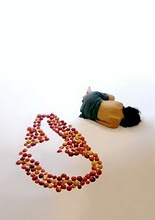
Gaby MATEO
CATALINA CHERVIN
Patricia BRAVO
VÍCTOR CHACÓN - FERREY
GUSTAVO FARES
Jorge GÓMEZ-RESTREPO

GUILLERMO CUELLO